The Best Types of Siding in Connecticut – Ultimate Guide
Choosing the best siding for a Connecticut home means balancing durability, maintenance, cost, appearance, and performance in New England weather. Connecticut siding can face freezing temperatures, humid summers, heavy rain, snow, and coastal exposure depending on where you live.
Five of the best types of siding in Connecticut are:
Below, we compare where each option works best, its main advantages and drawbacks, and what Connecticut homeowners should consider before choosing.
What Is the Best Siding for Connecticut Homes?
There is no single siding material that is best for every Connecticut home. Fiber cement is a good all-around choice for durability and weather resistance, while composite siding suits homeowners who want the appearance of wood with lower maintenance requirements. Vinyl is typically the more budget-friendly choice, while cedar appeals to homeowners who prioritize natural New England character.
Your location, budget, maintenance preferences, and home style should determine which siding makes the most sense for your property.
Free Guide for Homeowners
2026 SIDING MATERIAL GUIDE
Learn how smart homeowners balance aesthetics, durability, and budget to choose the perfect exterior shield that withstands New England’s toughest weather.
Climate & Code Factors in Connecticut
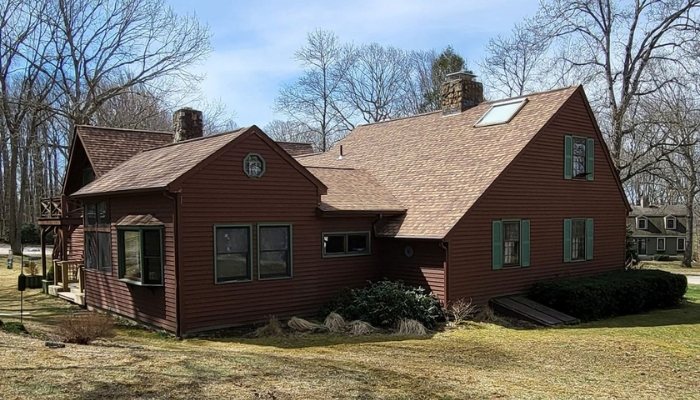
When choosing between types of siding, Connecticut homeowners need to consider the effect local weather can have on exterior materials.
- Nor’easters can bring heavy snow, rain, and strong winds.
- Freeze-thaw cycles can cause cracking, warping, and other damage to materials that are not suited to repeated temperature changes.
- Coastal salt exposure can contribute to corrosion and exterior wear over time.
- High humidity and moisture can increase the risk of mold, rot, and warping in susceptible materials.
For these reasons, siding should be selected and installed with Connecticut’s seasonal weather in mind.
The Connecticut State Building Code also includes requirements related to moisture management and exterior wall assemblies. Flashing helps direct water away from vulnerable areas, while vapor control and other moisture-management measures vary according to the wall assembly and insulation being used.
Your siding contractor can help determine which state and local requirements apply to your home and project.
Best Types of Siding in Connecticut Compared
The best siding choice depends on what matters most to you. Here is a quick comparison before looking at each material in more detail.
| Siding Type | Best For | Maintenance | CT Weather Performance |
| Fiber cement | All-around durability | Low to moderate | Excellent |
| Composite | Low-maintenance wood appearance | Low | Excellent |
| Vinyl | Budget-conscious projects | Low | Good |
| Cedar | Natural New England appearance | Higher | Good with proper care |
| Stone veneer | Premium accents and exterior details | Low | Excellent |
Fiber Cement Siding – James Hardie Plank
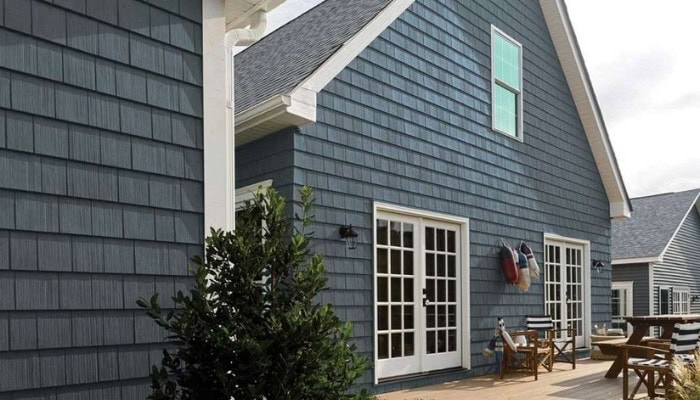
Fiber cement siding, including James Hardie Plank, is known for durability and resistance to several problems that can affect exterior materials. It is noncombustible, resists moisture when properly installed, and is not vulnerable to insect damage in the same way as natural wood.
It is available in a range of profiles and finishes, including options designed to resemble traditional wood siding and cedar shingles.
One tradeoff is weight. Fiber cement is heavier than vinyl and requires proper installation, which can contribute to higher labor costs.
Connecticut homeowners can expect to pay approximately $5.43 to $6.48 per square foot, although the final cost depends on the product, home design, installation requirements, and other project factors.
Fiber cement is often considered by homeowners who want a balance between appearance, durability, and relatively manageable maintenance.
Cedar Shake Siding
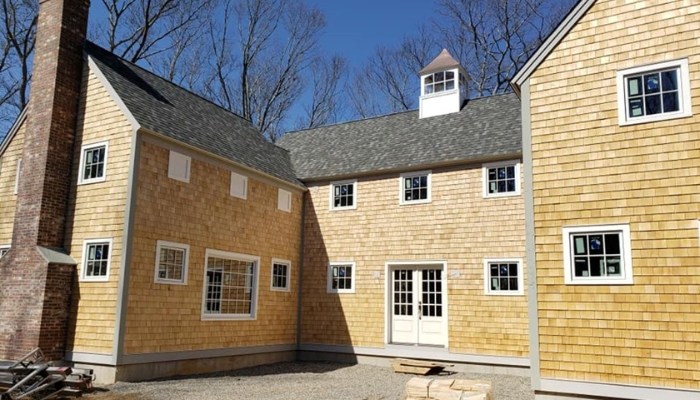
Cedar shake siding is closely associated with traditional New England homes and works particularly well for homeowners who want a natural exterior.
Because cedar is real wood, each installation has natural variation in grain, tone, and texture. Cedar can also work well as an accent alongside other siding materials.
At approximately $6.14 to $7.24 per square foot for wood clapboard, cedar can cost more than vinyl and some fiber cement options.
It also requires more regular care. Staining, sealing, and periodic inspection help protect the wood from moisture, insects, and weathering.
For homeowners who prioritize a natural appearance and are comfortable with the maintenance requirements, cedar remains one of the most distinctive siding options for Connecticut homes.
Composite Siding

Composite siding can provide the appearance of natural wood while reducing some of the maintenance associated with traditional wood products. Depending on the product, composite siding can resist moisture, impact, cracking, rot, and other common exterior problems.
Properly installed composite siding can provide decades of service while requiring relatively little routine maintenance. Pricing varies according to the product, home size, installation conditions, and selected finish, but composite generally sits above entry-level vinyl in terms of cost.
Everlast is a composite siding option designed to provide the appearance of wood with lower maintenance requirements. Its composite construction and acrylic capstock help resist moisture, fading, cracking, and other common exterior wear.
K.P. LaMarco installs Everlast composite siding throughout Connecticut, giving homeowners another option to compare with fiber cement, cedar, and vinyl based on maintenance, appearance, and budget.
Vinyl Siding
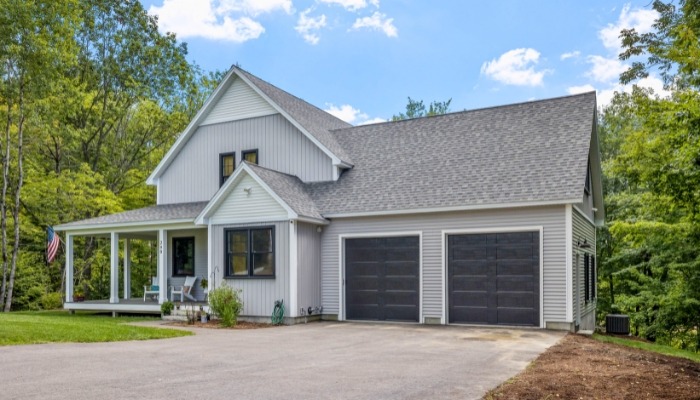
Vinyl remains a popular siding choice because it combines relatively low upfront costs with a wide selection of colors and profiles.
Depending on the siding type, color, product, and availability, homeowners may pay approximately $3.93 to $5.56 per square foot.
Vinyl is available in traditional horizontal profiles as well as styles designed to imitate shingles, shakes, and other exterior finishes.
Many modern vinyl products are designed to resist fading, although some color change can still occur after years of sun and weather exposure.
Vinyl requires relatively little maintenance and is not vulnerable to insect damage. However, very cold temperatures can make some vinyl products more brittle, and panels can be damaged by significant impact.
Stone Veneer Siding
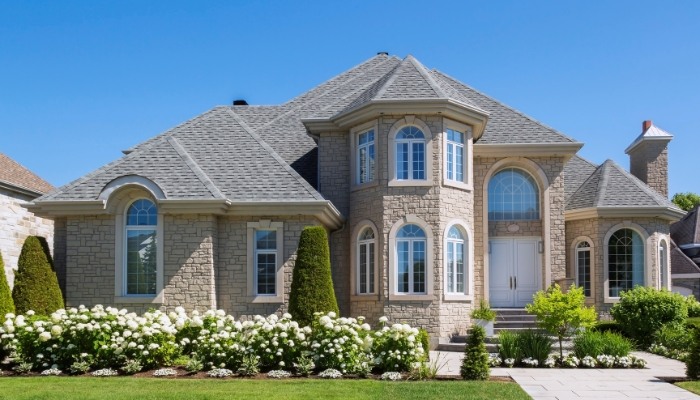
Stone veneer is often used to give part or all of a home’s exterior a more substantial, premium appearance. It can also be paired with vinyl, fiber cement, or other siding materials.
Properly installed stone veneer can perform well against rain, snow, temperature changes, and other conditions common in Connecticut.
Stone veneer has a considerably higher upfront cost than many siding options. Depending on the size of the home and complexity of the installation, a project may cost upwards of $41,000.
Both natural and manufactured stone products are available, giving homeowners different options based on appearance and budget.
Stone veneer is especially useful as an accent around entrances, foundations, chimneys, and architectural features rather than necessarily covering every exterior wall.
Free Guide for Homeowners
2026 SIDING MATERIAL GUIDE
Learn how smart homeowners balance aesthetics, durability, and budget to choose the perfect exterior shield that withstands New England’s toughest weather.
Style & Color Trends for CT Neighborhoods
Connecticut homes range from coastal properties and traditional Colonials to newer contemporary designs, so siding style and color often depend on the architecture of the home and surrounding neighborhood.
- Colors: Light and neutral siding remains common throughout Connecticut, including gray, white, beige, and other nature-inspired shades. Some homes combine two complementary siding colors to add contrast.
- Accents: Shingle-style siding can add traditional New England character and can be paired with horizontal or vertical siding.
- Contrasting elements: Trim, windows, doors, roofing, and other architectural elements can be used to create contrast without changing the home’s overall style.
Homeowners should also check whether an HOA, historic district, or other local requirement limits exterior colors or materials before making final design decisions.
Energy Efficiency & Insulation
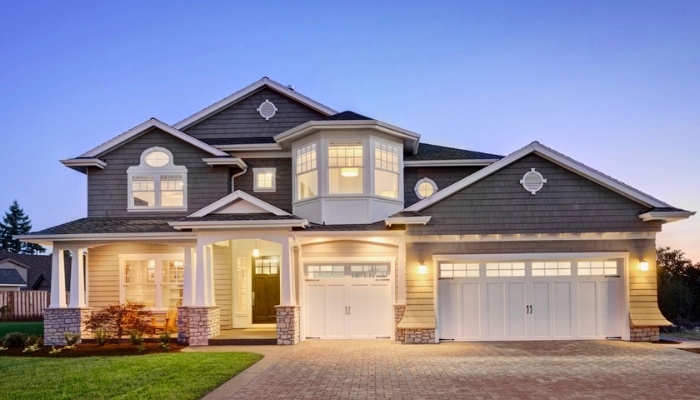
Connecticut winters can be cold, making the entire exterior wall assembly important for energy performance.
Siding itself is only one part of that system. Insulation, air sealing, weather barriers, windows, roofing, and installation quality all affect how well the home retains heat.
When comparing siding options, homeowners may also encounter R-values. R-value measures resistance to heat flow, with higher values indicating greater insulating ability.
- Insulated vinyl: Insulated vinyl includes a foam backing that can increase the thermal resistance of the exterior wall compared with standard vinyl siding.
- Fiber cement: Fiber cement itself provides relatively little insulation, but exterior insulation and properly designed wall assemblies can improve overall performance.
- Wood: Natural wood provides some insulating value, although it should not be treated as a replacement for proper wall insulation.
Homeowners interested in reducing heating and cooling costs should look beyond siding alone and consider how the entire exterior wall system will perform.
Maintenance Requirements
Different types of siding have different maintenance requirements, which should be considered alongside upfront cost and appearance.
- Vinyl: Vinyl siding is relatively low maintenance. Periodic washing with a hose and mild detergent can remove dirt and buildup. High-pressure washing should be approached carefully because too much pressure can damage panels or push water behind the siding.
- Fiber cement: Fiber cement should be inspected and cleaned periodically. Painted products may eventually require repainting, often after 10 to 15 years depending on the product, finish, exposure, and condition.
- Cedar shake siding: Cedar needs more regular attention because it is a natural material. Sealing or staining may be required every few years depending on exposure and the finish being used.
- Stone veneer: Stone veneer generally requires limited routine maintenance, but homeowners should inspect joints, mortar, flashing, and nearby areas for signs of deterioration or moisture problems.
Basic cleaning may be handled by homeowners, but multi-story homes or siding with visible damage may require professional inspection or maintenance.
Installation & Permitting Checklist
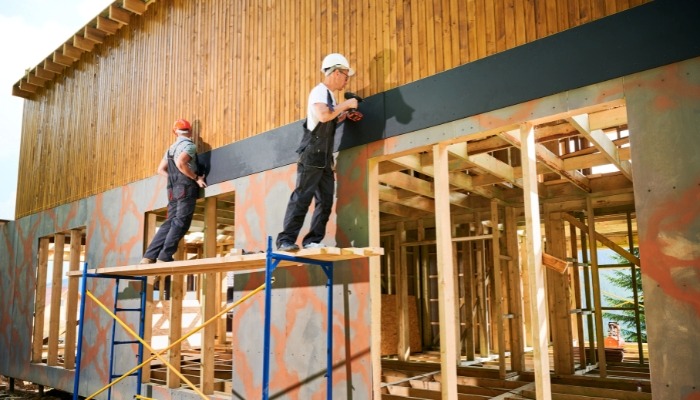
Not all siding materials are installed in the same way, and contractor qualifications can have a major effect on the performance of the finished exterior.
Before hiring a contractor, consider the following:
- Registration and references: Connecticut home improvement contractors must be registered with the Connecticut Department of Consumer Protection. Verify the contractor’s active registration and review references, past projects, and customer feedback before hiring.
- Permits: Permit requirements can vary by municipality and project scope. Check with your town or ask the contractor who will be responsible for permits and inspections.
- Moisture management: Proper flashing, weather barriers, and other water-management details are important parts of a siding installation.
- Existing damage: Removing old siding may reveal damaged sheathing, rot, or other issues that need to be corrected before the new material is installed.
- Waste and cleanup: Confirm whether removal and disposal of the existing siding are included in the project estimate.
A siding contractor should be able to explain what work is included, which permits may be required, and how the exterior will be prepared before installation begins.
Choosing the Right Siding: Decision Matrix
If you’re comparing the best types of siding in Connecticut, start with the factor that matters most for your home.
| If Your Priority Is… | Consider |
| Lower upfront cost | Vinyl |
| Low maintenance | Composite or vinyl |
| Overall durability | Fiber cement or composite |
| Natural wood appearance | Cedar |
| Traditional New England character | Cedar or fiber cement |
| Premium exterior accents | Stone veneer |
| Ability to repaint later | Fiber cement or cedar |
After narrowing down the materials, consider these additional factors:
- Budget: Compare the installed cost rather than material price alone. Labor, removal of existing siding, trim, repairs, home height, and design complexity can all affect the final price.
- Neighborhood and HOA requirements: Look at neighboring homes and check whether exterior materials, profiles, or colors are subject to local or HOA restrictions.
- Lifespan: Consider how long you expect the siding to last and whether you plan to stay in the home long enough for lifespan and long-term maintenance to become major factors.
- Resale considerations: Different materials can affect curb appeal and buyer perception differently. Higher-cost materials may appeal to some buyers, but the condition and installation quality of the siding are also important.
- Maintenance tolerance: Vinyl and composite generally require less regular care than natural cedar. Fiber cement and stone veneer also have different inspection and maintenance requirements that should be considered before installation.
There is usually a tradeoff between upfront price, appearance, maintenance, and long-term performance. Comparing those factors together gives you a better basis for choosing siding than selecting a material based on price alone.
Free Guide for Homeowners
2026 SIDING MATERIAL GUIDE
Learn how smart homeowners balance aesthetics, durability, and budget to choose the perfect exterior shield that withstands New England’s toughest weather.
Conclusion
The best siding for a Connecticut home depends on the property, budget, architectural style, and level of maintenance you are comfortable with.
Fiber cement provides a good balance of durability and appearance for many Connecticut homes. Composite siding is another low-maintenance option for homeowners who prefer a wood-like finish. Vinyl remains attractive for budget-conscious projects, cedar provides natural New England character, and stone veneer works particularly well for premium accents.
Before making a final decision, compare the installed cost, maintenance requirements, expected durability, and suitability for your home’s location.
Our team at K.P. LaMarco can help you compare siding options and determine which materials fit your property and budget. Whether you’re beginning to research a siding replacement or are ready to request pricing, contact K.P. LaMarco for a free estimate.