
Everlast Siding vs Hardie Plank: Which Wins in CT?
If you’re planning siding replacement in Connecticut and you’ve narrowed it down to premium options, you’ve probably already run into the same two names: Everlast composite and Hardie Plank fiber cement.
Both are strong premium siding choices, but in different ways.
Everlast is a composite siding with a UV-resistant acrylic capstock, so it never needs painting or caulking. Hardie Plank is a fiber cement siding, and its HZ5 line is built for cold climates like ours.
For most Connecticut homes, the right pick comes down to three things: how much maintenance you want, how much fire resistance matters, and how exposed your home is to weather.
Below, we look at how each one performs in Connecticut weather, what they cost, and which type of home each fits best.
Key Takeaways:
- Everlast wins on low maintenance, with no painting, no caulking, and strong moisture resistance.
- Hardie Plank wins on durability and fire resistance, with an HZ5 line built for cold climates.
- Installed cost in CT runs about $10 to $30+ per sq ft for Everlast, and $6 to $15 per sq ft for Hardie Plank.
- Even the best siding fails with a bad install, so hire a CT siding contractor with hands-on experience in your chosen product.
What Is the Difference Between Everlast Siding and Hardie Plank?
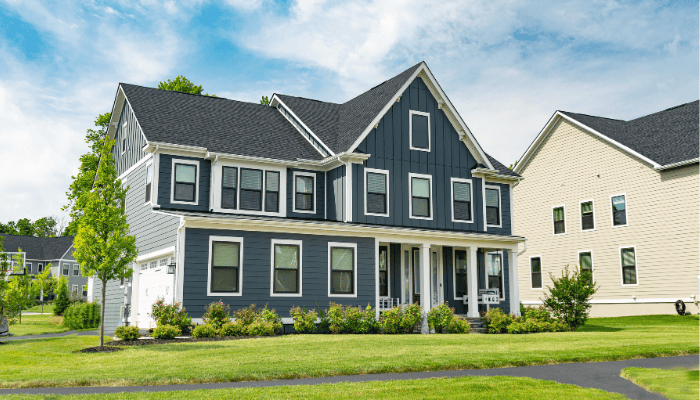
Everlast composite siding
Everlast is an advanced composite siding built so you never have to paint or caulk it. The boards are wrapped in a UV-resistant acrylic capstock with acrylic colorants baked in, so the finish holds up year after year. The composite material underneath is water resistant too.
The whole system is built around being maintenance free, which matters a lot in Connecticut, where humid summers, heavy rain, and snowmelt punish traditional siding fast.
Hardie Plank fiber cement siding
Hardie Plank is James Hardie’s flagship fiber cement siding and the company’s main lap siding product. It’s made from cement, sand, water, and cellulose fibers, which makes the boards dense, dimensionally stable, and naturally fire resistant.
The Hardie HZ5 line is engineered specifically for cold climates like ours, with freezing temps, snow, and ice in mind. It can be field-painted or ordered with a factory ColorPlus finish, which is handy for classic New England looks like white clapboard or colonial red.
Composite siding vs Hardie Board: what is the difference for CT homes?
For a Connecticut home, the difference comes down to what each product does best. Everlast is stronger on low maintenance and moisture resistance. Hardie Plank is stronger on fiber cement durability, fire resistance, and repaintability.
Free Guide for Homeowners
2026 SIDING MATERIAL GUIDE
Learn how smart homeowners balance aesthetics, durability, and budget to choose the perfect exterior shield that withstands New England’s toughest weather.
Which Siding Performs Better in Connecticut Weather?
Connecticut’s climate isn’t just one thing. Winters are cold and snowy, summers warm and humid, and a coastal home near Long Island Sound deals with different storm and frost patterns than an inland home in Litchfield County.
So, the right siding answer depends a lot on where your house is.
Which is better for snow, ice, and freeze-thaw cycles?
For snow, ice, and freeze-thaw cycles, Hardie Plank’s HZ5 line is the stronger pick. It’s engineered specifically for freezing temps, snow, and the seasonal swings we see here.
Everlast holds up well too, with its moisture-resistant composite core and low-maintenance finish, but it doesn’t have the dedicated cold-climate engineering Hardie HZ5 does.
Which is better for humid summers and heavy rain?
For humid summers and heavy rain, Everlast has a clear edge. Its water-resistant composite is built for exactly this kind of exposure. And because the finish never needs painting or caulking, you skip the peeling paint and failed sealant joints that bother owners in the wet season.
Hardie Plank, on the other hand, performs well in moisture too, but only if you keep the paint intact and the caulking in good shape over the years.
Which is better for CT shoreline homes?
Along Connecticut’s shoreline, siding wears down fast. Constant salt air, wind-driven rain off Long Island Sound, and storm exposure mean homes in Fairfield, New Haven, and Middlesex/New London counties chew through paint and caulking faster than inland homes do.
This being the case, Everlast pulls ahead here because its no-paint, no-caulk finish skips that “wearing down” pattern entirely.
Which is better for nor’easters and wind-driven rain?
For nor’easters and wind-driven rain, no single siding solves everything.
Everlast handles the rain side slightly better, thanks to its water-resistant composite. Hardie Plank’s HZ5 handles the snow and cold side.
The real protection comes from the whole wall behind the siding, including the weather barrier, flashing, and drainage. That matters in a state hit by 45 separate billion-dollar weather disasters since 1980, including winter storms, hurricanes, and severe storms. So any weak point in the wall is where damage starts.
How Much Does Everlast Siding Cost in CT vs Hardie Plank?
Cost of Everlast siding in CT
Everlast siding typically runs around $10 to $30+ per square foot installed nationally. That’s a useful benchmark before you call for quotes. In Connecticut, the actual cost of Everlast siding shifts based on local labor rates, home height, trim complexity, and whether your old siding and sheathing come off cleanly or reveal rot or moisture damage.
Note that older colonials, capes, shoreline homes, and historic properties often have hidden wall repairs that don’t show up until the wall is open. And material and labor for those repairs roll into the final number.
Cost of Hardie Plank in CT
Hardie Plank typically lands around $6 to $15 per square foot installed nationally, which makes it generally less expensive upfront than Everlast. How much is James Hardie siding in Connecticut specifically? That depends on the product line, whether you go with field paint or a ColorPlus finish, the trim package, and whether your installer is certified for Hardie products.
Keep in mind, a Hardie Plank cost quote isn’t always apples-to-apples until you confirm it includes all the trim, painting, flashing, permits, and any rot or sheathing repairs the job actually needs.
Which siding is the better value for Connecticut homeowners?
It really depends on your needs.
Hardie Plank often has the lower upfront installed cost, which appeals if you’re working within a tight budget or focused on the project price today. Everlast tends to win on long-term costs since you’re not repainting every several years or chasing failed caulk joints.
How Long Does Hardie Siding Last in CT vs Everlast Siding?
Both products are built to last decades, but the real answer depends on warranty length, lifespan, and how much maintenance you keep up with along the way.
How long does Hardie siding last in Connecticut?
Hardie Plank comes with a 30-year non-prorated warranty on the fiber cement boards themselves, plus a 15-year warranty on the ColorPlus finish. Lifespan is a different question.
In Connecticut, real-world performance depends on winter exposure, paint or finish condition, the caulking, and how well it was installed. A well-maintained Hardie install can comfortably last past 30 years here.
Does Everlast siding require less maintenance in CT?
Yes. Everlast is built so you don’t have to scrape, caulk, or repaint, which matters a lot in Connecticut, where humid summers, freeze-thaw cycles, and older homes turn ongoing repainting into a chore.
Basic cleaning and an annual exterior look-over after winter and major storms is about all you’ll do.
Which siding is more maintenance free?
Everlast wins for anyone trying to skip repainting and caulking altogether. Hardie Plank is still a low-maintenance choice compared to wood, but the finish needs upkeep and the caulking has to stay in good shape to perform like it should.
Everlast Siding vs Hardie Plank: Which Is Better for CT Homes?
Side by side, the differences between Everlast and Hardie Plank are easier to see.
Here’s how the two compare across the factors that matter most for a Connecticut home, from humid summers and freeze-thaw to fire resistance and long-term cost.
| CT Decision Factors | Everlast Siding | Hardie Plank |
| Humid summers | Strong on low maintenance and water resistance | Strong if installed and finished correctly |
| Snow and ice | Good option with proper installation | HZ5 is built for freezing temps, snow, and ice |
| Freeze-thaw | Moisture resistance helps | HZ5 climate engineering helps |
| Shoreline homes | Strong moisture resistance and low upkeep | Good, but details and finish maintenance matter |
| Fire resistance | Check the product specs | Stronger fire resistance |
| Repainting | Not intended to need repainting | Can be repainted |
| Long-term maintenance | Major strength | Moderate to low, but finish upkeep matters |
| Upfront cost | Usually premium | Often lower to mid-premium |
| Older CT homes | Good if walls are properly prepped | Good if the installer handles substrate and clearances |
| Best for | Low-maintenance homeowners | Fiber cement, fire resistance, and design flexibility |
| Avoid if | Budget is tight or fire rating is top priority | You want no repainting or caulking long-term |
For Connecticut homeowners who care most about low maintenance and moisture resistance, Everlast is usually the better fit.
For homeowners who care about fiber cement durability, fire resistance, repaintability, and cold-climate engineering, Hardie Plank wins out. The real deciding factor, though, is the home’s location, condition, and the quality of the install.
Free Guide for Homeowners
2026 SIDING MATERIAL GUIDE
Learn how smart homeowners balance aesthetics, durability, and budget to choose the perfect exterior shield that withstands New England’s toughest weather.
What Makes Siding Actually Last in Connecticut?
In Connecticut, three things separate a siding install that lasts from one that fails: how the contractor manages water at the wall, who you hire, and whether the work passes local inspection.
Why does water management matter so much in Connecticut?
Water management is everything in Connecticut. Wind-driven rain, snowmelt, and humidity all push moisture toward the wall, and if it gets in, it can rot the wood underneath and ruin the insulation. Several install details decide whether your siding lasts thirty years or starts failing in five:
- The weather-resistant barrier (WRB) behind the siding
- The flashing around windows and edges
- The trim around windows, doors, and corners
- The drainage path off the wall
- The sheathing (the plywood layer underneath)
Everlast, for example, is built to shed water, not seal it out, so it needs a proper WRB behind it as the actual waterproof layer. Any older sheathing, past leaks, or rot has to be fixed before new siding goes up. Otherwise, you’re just covering up problems.
What should homeowners ask a CT siding contractor?
Who you hire matters as much as the siding itself, so ask these questions before signing anything:
- Are you experienced with Everlast, Hardie, or both?
- Are you registered with Connecticut’s Department of Consumer Protection?
- Will you handle permits?
- Will you inspect sheathing and trim before installation?
- What workmanship warranty is included?
- Are the fasteners, flashing, and trim details right for my shoreline or inland exposure?
Finally, Connecticut requires home improvement contractors to be registered, and to carry insurance, before they advertise or start work.
Do CT homeowners need a permit for siding replacement?
It depends on your town. Many Connecticut municipalities require permits for siding or exterior work, but the rules vary by town and scope of the job. Cheshire, for example, lists siding among projects that need a permit, and North Haven groups roofing, siding, door, and window replacement under permit-required work.
Easiest move? Ask your contractor and call your local building department before work begins.
Case Study: A Stratford Shoreline Siding Project
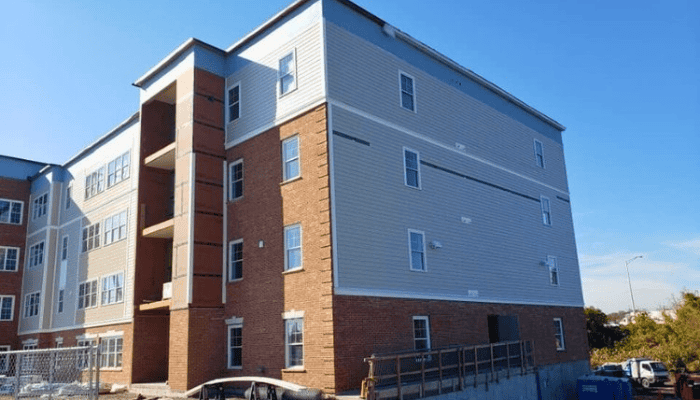
One of our recent projects in Stratford, CT, a shoreline town in Fairfield County, speaks to exactly this kind of decision. The homeowner needed to replace aging siding and weighed Everlast composite against Hardie Plank fiber cement.
For this specific home, Hardie Plank made the most sense, and we installed it with a clean fit and full attention to the weather details that matter on the coast. The result: a refreshed, modern exterior, stronger weather protection, and a low-maintenance future the homeowner can count on.
What Are the Next Steps for Choosing Siding in CT?
Here’s the order we’d recommend running through to land on the right siding choice for your CT home:
- Decide what matters most to you, whether low maintenance, cost, fire resistance, moisture protection, or design flexibility.
- Identify your home’s exposure, whether shoreline, inland, wooded lot, hilltop, or older neighborhood.
- Inspect the exterior for damage like rot, soft sheathing, window leaks, failed trim, or old storm damage.
- Compare samples in person, including Everlast composite, Hardie Plank, and any other product you’re considering.
- Get itemized quotes for both products, covering material costs, labor, and any home-specific extras.
- Confirm the scope of each quote, including removal, weather-resistant barrier, flashing, trim, disposal, permits, and warranty.
- Verify your contractor’s credentials, including Connecticut registration, insurance, and product experience.
- Reach out to us when you’re ready for a consultation, an honest comparison, and a recommendation built around your home.
Free Guide for Homeowners
2026 SIDING MATERIAL GUIDE
Learn how smart homeowners balance aesthetics, durability, and budget to choose the perfect exterior shield that withstands New England’s toughest weather.
Conclusion
Everlast tends to be the right call for homeowners who prize low maintenance and moisture resistance. Hardie Plank tends to win for homeowners who value fiber cement durability, fire resistance, the option to repaint, and cold-climate engineering. The best choice depends on your home’s location, exposure, budget, and the quality of the install.
Still weighing your options? Contact us to compare Everlast and Hardie Plank for your Connecticut home and get a project-specific siding estimate.