

Cedar vs Hardie Siding in CT – Comparison Guide
For most Connecticut homeowners, Hardie siding is the better long-term choice because it handles moisture, pests, winter weather, and freeze-thaw cycles with less routine maintenance. Cedar siding is better if you want authentic wood grain, natural warmth, and a classic New England look.
Both can work well when installed correctly. The right choice depends on how much maintenance you want to take on, what style you prefer, your budget, and how long you plan to stay in the home.
This guide compares cedar siding vs Hardie Board across the factors that matter most for Connecticut homes: cost, lifespan, maintenance, appearance, weather resistance, and long-term value.
Key takeaways:
- Hardie siding is usually the better long-term choice for Connecticut homeowners who want lower maintenance and strong weather resistance.
- Cedar siding is best for homeowners who want real wood, natural grain, and a classic New England look.
- Cedar needs more upkeep, including staining, sealing, inspections, and finish maintenance.
- Hardie costs about the same as cedar in many projects, but labor, trim, finish, and repairs can change the final price.
- The right choice depends on your style, budget, maintenance tolerance, and how long you plan to stay in the home.
What Are the Pros and Cons of Cedar vs Hardie Siding?

The pros and cons of cedar and Hardie become clear when you look at them side by side. The table below shows the core trade‑offs so you can see which material fits your priorities.
| Cedar Siding | Hardie Siding | |
| Pros | Real wood, natural grain, authentic character, can be stained or painted, strong curb appeal | Fiber cement durability, wood-like appearance, pest and moisture resistance, strong cold-climate fit |
| Cons | Requires regular maintenance, vulnerable to rot and moisture if neglected, ongoing finish upkeep | Higher labor demands, requires correct installation, can cost more than basic siding options |
| Best For | Homeowners who want authentic natural wood and are willing to maintain it | Homeowners who want durability and a wood-like look with less routine upkeep |
| Avoid If | You want lower ongoing maintenance | You only want real wood |
Taken together, these points make the choice fairly clear: cedar is the better fit if real wood matters most, while Hardie suits homeowners who want a wood‑like look with less ongoing upkeep.
Free Guide for Homeowners
2026 SIDING MATERIAL GUIDE
Learn how smart homeowners balance aesthetics, durability, and budget to choose the perfect exterior shield that withstands New England’s toughest weather.
What Is the Difference Between Cedar and Hardie Siding?
The core difference is this: cedar is a natural wood product, and Hardie is a manufactured one.
Cedar siding is cut from real wood. It carries the natural grain, texture, and warmth that no manufactured product can fully replicate. It can be stained to highlight the wood’s character, sealed for protection, or painted for a more uniform look.
Cedar siding has been a go-to choice for traditional, coastal, rustic, and New England-style homes for generations. Plus, its appearance tends to improve with age when it’s properly maintained.
Hardie Board siding is a fiber cement product made by James Hardie. It is manufactured from a mix of cement, sand, water, and cellulose fibers. And it’s designed to be stable, durable, and resistant to the moisture and temperature swings that wear down real wood over time.
When comparing cedar siding vs Hardie Board, one of the first things homeowners notice is that Hardie is made to look like wood without the upkeep that wood demands. It comes in several profiles, such as lap siding, shingle-style siding, vertical panels, and trim, giving homeowners flexibility to match different architectural styles.
What Is the Cost of Cedar Siding vs Hardie Plank?
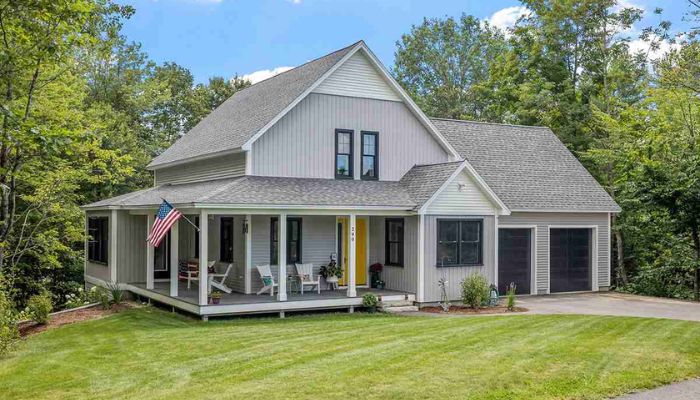
The cost of cedar siding vs Hardie Plank is closer than most homeowners expect.
National estimates from HomeGuide place cedar siding around $6 to $16 per square foot installed, while fiber cement runs roughly $6 to $15 per square foot installed.
That overlap means the final price often depends less on the material alone and more on the home, siding profile, finish, labor, and repair work needed before installation.
| Cedar Siding | Hardie Siding | |
| Installed Cost | About $6 to $16 per sq. ft. | About $6 to $15 per sq. ft. |
| Upfront Price | Can be moderate to high depending on wood grade, siding style, and finish | Often similar to cedar depending on product line, finish, and project complexity |
| Labor | Can increase with shingles, shakes, detailed trim, or custom profiles | Can increase because fiber cement requires correct cutting, handling, and installation |
| Finish Costs | Staining, sealing, or painting can add to the initial project cost | ColorPlus costs more upfront; primed boards need painting |
| Ongoing Costs | Higher because cedar needs regular refinishing and maintenance | Lower in most cases because routine maintenance is lighter |
| Best Long-Term Value | Best if real wood appearance matters most | Best if lower maintenance and weather resistance matter most |
For cedar, the main cost variables are:
- Wood grade: Higher grades cost more upfront but tend to hold up better over time.
- Siding style: Lap boards, shingles, and shakes each affect material and labor costs.
- Finish: Staining, sealing, or painting adds to the initial project cost.
- Ongoing maintenance: Cedar needs regular refinishing after installation, which adds up over the years.
For Hardie siding, the main cost variables are:
- Product line: Hardie Plank lap siding, shingle-style panels, vertical panels, and trim can each affect the final price.
- Finish: ColorPlus factory-finished siding usually costs more upfront than primed siding, but it may reduce repainting needs later.
- Labor: Fiber cement requires proper cutting, handling, flashing, and installation, which can increase labor costs.
- Additional materials: Trim, moisture barriers, flashing, and repair work all factor into the final number.
Connecticut homes add their own layer of complexity. Dormers, gables, multi-story walls, old siding removal, and any rot or sheathing repair discovered during the project can all push the final cost higher, regardless of which material you choose.
Which Siding Lasts Longer in CT Weather?
Both materials can hold up in Connecticut, but they don’t handle climate the same way.
Connecticut winters bring snow, ice, heavy rain, high humidity, and repeated freeze thaw cycles. Coastal areas add salt air and moisture on top of that. Siding that cannot manage those conditions will show it through cracking, warping, rot, or finish failure.
Hardie siding is built with that kind of climate in mind. James Hardie’s HZ5 product line is engineered for regions with freezing temperatures, seasonal snow and ice, and wide temperature swings.
According to James Hardie, the material resists shrinking, swelling, and cracking in wet and freezing conditions. Hardie Plank also carries a 30 year manufacturer warranty, which signals that the product is designed to stay structurally sound for decades when it is installed correctly.
For Connecticut homeowners who want strong weather resistance without heavy ongoing maintenance, Hardie is usually the more practical fit.
Cedar can last about 20 to 40 years, but the timeline depends almost entirely on how well it is maintained. Properly installed and regularly refinished cedar has performed well on New England homes for decades. The problems begin when maintenance slips.
Any skipped staining, neglected caulking, or delayed repairs give moisture a way in. Once water reaches the end grain or gets behind the boards, rot, warping, and decay follow.
Ultimately, lifespan depends on installation, exposure, and maintenance. Hardie usually requires less homeowner upkeep to reach its full service life, while cedar depends more heavily on consistent care.
How Much Maintenance Does Cedar Siding Need Compared to Hardie Board?
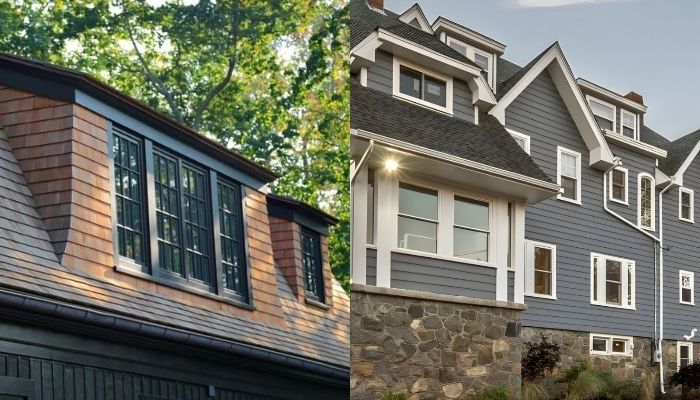
Maintenance is one of the biggest differences between these two materials. And for many homeowners, it ends up being the deciding factor.
Cedar Siding Maintenance
Cedar siding requires consistent, scheduled upkeep to stay in good condition. That means regular washing to clear dirt and mildew buildup, annual inspections for soft spots, cracks, or peeling finish. And, periodic caulking checks around trim, joints, and penetrations.
Of course, re-staining, sealing, and repainting is part of the routine as well.
Additionally, according to SBC Cedar’s maintenance guidelines, semi-transparent cedar finishes generally need restaining every 3 to 5 years, while more translucent finishes may need reapplying every 1 to 2 years.
Hardie Board Maintenance
Hardie Board requires less maintenance overall. The routine is also fairly straightforward: periodic cleaning, checking caulking and joints, and inspecting trim and installation details over time.
If you choose a primed Hardie product, repainting will eventually be needed. In most cases, repainting falls somewhere around every 8 to 15 years depending on paint quality, sun exposure, climate conditions, and how well the siding was installed and maintained.
ColorPlus factory-finished siding is designed to extend that timeline further. James Hardie backs ColorPlus with a 15-year limited warranty, and many homeowners do not need repainting until roughly the 12 to 15 year range under normal conditions.
That said, lower maintenance does not mean zero maintenance. Caulking, joints, flashing details, and moisture management still need occasional inspection over the life of the siding.
Maintenance at a Glance
| Task | Cedar Siding | Hardie Board |
| Washing | Twice per year (spring + fall) | Once per year |
| General inspections | Twice per year | Once every 1–2 years |
| Caulking checks | Once per year | Every 1–2 years |
| Staining / sealing | Every 1–5 years (finish‑dependent) | Not required |
| Repainting | Repainting every 5–7 years | Every 8–15 years (12–15 with ColorPlus) |
Which Looks Better: Cedar Wood Siding or Hardie Board?
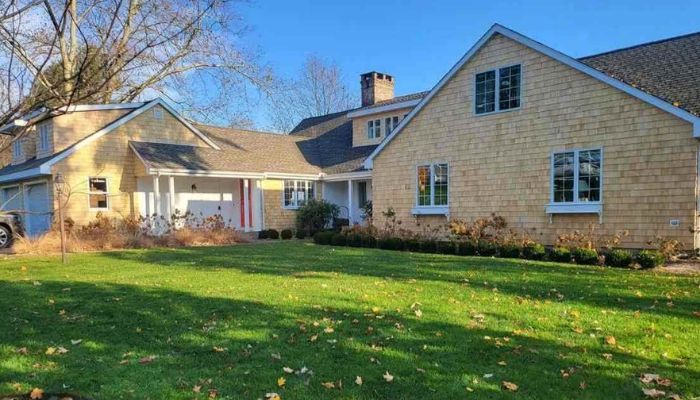
Appearance is subjective, but the difference is easy to see: cedar looks natural because it is natural, while Hardie offers a more consistent wood-like finish.
Cedar is the clear choice if authenticity matters most. Real wood siding carries natural variation in grain, tone, and texture that no manufactured product fully replicates. That warmth and depth is part of what makes cedar a natural fit for classic New England homes, from coastal shingle-style cottages to colonial clapboard.
Cedar can be stained to let the grain show through, painted for a more finished look, or left to weather into the soft gray patina that many Connecticut homeowners intentionally pursue.
Hardie Board approaches the look from a different angle.
Wood-grain textures are available across most product lines, and smooth or traditional lap profiles give it flexibility across architectural styles. The finish is more consistent than real wood, with no natural variation, but also no irregularities.
ColorPlus options offer a wide range of colors that hold well over time. For homeowners who want a wood-like exterior without committing to the upkeep real wood requires, Hardie closes that gap more than most people expect.
Is Cedar or Hardie Siding Better for Connecticut Homes?
For most Connecticut homeowners, Hardie siding is the more practical long-term choice. It handles cold, moisture, pests, and freeze-thaw cycles with less routine upkeep, which matters in a climate that tests siding every winter.
Cedar is still a strong option, but it requires a homeowner who is genuinely prepared to maintain it on schedule.
You can also frame the decision by goal:
- Best for low maintenance: Hardie
- Best for real wood character: Cedar
- Best for long-term upkeep savings: Hardie in most cases
- Best for a historic or natural exterior style: Cedar
- Best for CT weather resistance: Hardie, especially when installed correctly
That said, no recommendation is universal.
A cedar home with good overhangs, a shaded north-facing wall, and an attentive owner can outperform a poorly installed Hardie job. Material choice matters, but so does what is behind the siding, how the trim and flashing are handled, and whether any moisture issues in the existing wall are addressed before new siding goes on.
How Should You Choose Between Cedar and Hardie Siding?
If you are ready to move forward, here is a simple way to work through the decision:
- Decide whether real wood or lower maintenance matters more to you.
- Compare upfront cost with long-term upkeep (not just the installation estimate).
- Review your home’s exposure to shade, moisture, snow, and coastal air.
- Check the condition of your old siding, trim, sheathing, and any existing moisture damage before picking a material.
- Choose the profile and finish that fits your home’s architectural style.
- Get a local quote from a Connecticut siding contractor who can assess the actual conditions.
These steps should ensure you go with the best, most cost-effective and longest lasting siding possible.
Free Guide for Homeowners
2026 SIDING MATERIAL GUIDE
Learn how smart homeowners balance aesthetics, durability, and budget to choose the perfect exterior shield that withstands New England’s toughest weather.
Conclusion
The decision comes down to two clear paths.
Cedar is the right choice for homeowners who want authentic natural wood and the classic New England look that comes with it. It rewards care and it shows when that care is given.
Hardie is the right choice for homeowners who want a wood-like exterior with less routine maintenance and stronger resistance to Connecticut’s winters, moisture, and pests.
In either case, the material is only part of the answer. Connecticut’s climate makes installation quality just as important as what goes on the wall.
K.P. LaMarco can inspect your home, compare your siding options, and recommend the right fit based on your budget, style, and long-term plans. Request a free estimate today.