
How Long Does Vinyl Siding Last in Connecticut?
If you live in Connecticut, your siding is working harder than siding in most other states.
Between the cold, snowy winters, the humid summers, and whatever a coastal storm decides to throw at your house, vinyl siding has to hold up to a lot more than curb appeal.
But the good news is this: most vinyl siding lasts 20 to 40 years, and premium or insulated vinyl can go even longer when it’s installed well and looked after.
How long yours actually lasts comes down to the material, the installation, as well as how much sun, moisture, and storm exposure your home has dealt with over the years.
In this post, we’ll go over what drives that lifespan, how Connecticut’s weather factors in, and when repair makes more sense than replacement.
Key takeaways:
- Vinyl siding lasts 20-40 years in Connecticut homes, with premium or insulated products lasting longer
- Early failure usually comes down to thin/low-grade material, poor installation, or storm damage
- Connecticut’s freeze-thaw winters, humid summers, and coastal exposure all shorten or extend siding life depending on where you are in the state
- Isolated damage is usually a repair. Widespread cracking, warping, or moisture issues point to replacement instead.
- Regular cleaning and inspection go a long way toward getting the most life out of your siding
- Replacing siding in CT typically runs $16,500-$41,250 depending on home size and materials
Free Guide for Homeowners
2026 SIDING MATERIAL GUIDE
Learn how smart homeowners balance aesthetics, durability, and budget to choose the perfect exterior shield that withstands New England’s toughest weather.
What Is the Average Lifespan of Vinyl Siding in Connecticut?
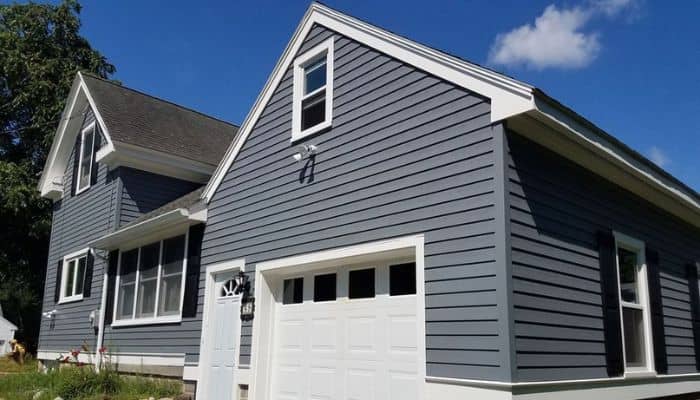
Most Connecticut homes get 20 to 40 years out of vinyl siding, which is a wide window. It comes down to the quality of the material, the installation, and how much exposure it’s taken over the years.
Standard vinyl siding installed more recently generally holds up for 25 to 35 years, which is the number most homeowners can plan around.
Premium or insulated vinyl is built with thicker, more rigid panels, and when it’s installed correctly, it can realistically last past 30 to 50 years.
On the flipside, siding that was poorly installed or has been dealing with moisture problems can fail in under 20 years, warranty or no warranty.
Older homes are more likely to have this kind of vinyl still on the walls, since it’s had more time to crack, fade, or go brittle.
Manufacturers commonly back vinyl siding with lifetime warranties for the original homeowner, and prorated coverage of 50 years or more for anyone who buys the home after that.
It sounds reassuring, but a warranty doesn’t stop water from getting behind a panel. It just means the manufacturer will replace the material if it fails within the covered period, not that your installation or your home’s conditions won’t cause problems long before then.
Here’s how all of that breaks down by condition:
| Vinyl Siding Condition | Expected Lifespan | Notes |
| Older or thin vinyl | 20-25 years | More vulnerable to cracking, fading, and brittleness |
| Standard vinyl | 25-35 years | Common planning range for most CT homes |
| Premium or insulated vinyl | 30-50+ years | Better rigidity and performance potential |
| Poor installation or moisture issues | Under 20 years | Buckling, leaks, and hidden rot can shorten life significantly |
What Affects Vinyl Siding Durability the Most in Connecticut?

A mix of material quality, installation, and exposure decides how long your siding actually holds up. Furthermore, Connecticut’s weather happens to test all three harder than most places.
Material and installation
Thicker, higher-grade vinyl resists impact, warping, and heat distortion better than thin, budget-grade panels. Even so, good material can still fail early if it’s put up wrong.
Picture a January day in Connecticut that dips into the 20s overnight and climbs back above freezing by afternoon. That swing puts a panel through a full expansion-and-contraction cycle in a matter of hours, and vinyl needs room to move when that happens.
That room to move has to come from how the panels are nailed to the house. Manufacturer guidance calls for roughly 1/32 inch of clearance between the fastener head and the panel, just enough room for the vinyl to shift as it expands and contracts.
Skip that clearance, and panels can warp or crack the first time a swing like that hits, no matter how good the material was to begin with.
Exposure: sun, storms, and snow
That same temperature cycle also drives how much a home’s sun exposure matters. South- and west-facing walls fade faster and go through more expansion and contraction cycles from constant direct light, on top of the seasonal swing every wall already deals with.
Storms and winter add a more sudden kind of wear on top of that:
- Wind, flying debris, hail, and falling branches can loosen, crack, or tear panels off outright, especially during nor’easters or high-wind coastal storms
- Snow buildup and ice put extra weight and stress on panels already dealing with the cold
- Wind during a winter storm can find and exploit any panel that’s already loose
Connecticut gets 30-35 inches of snow along the coast and up to around 50 inches in the Northwest Hills most winters, so that kind of weight and stress on panels isn’t a rare event, it’s a normal part of the season.
Moisture
All of that visible wear is easy to spot, but moisture causes damage while staying hidden the longest, since most of it happens behind the siding where you can’t see it. It typically sneaks in through:
- Gaps in flashing
- House wrap that’s damaged or missing
- Clogged or poorly draining gutters
- Loose detailing around windows and doors
Once it’s in, it usually shows up on the sheathing before it’s obvious from outside, and humidity makes this worse in the summer by encouraging mildew and algae on shaded sides of the house or anywhere airflow is limited.
Keep in mind, where a home sits in the state affects durability, too.
Coastal homes deal with extra wear from salt air and wind-driven rain, and NOAA notes Connecticut’s coastal sea level has risen faster than the global average, which is worth factoring in if you’re near the water.
Inland homes trade that for colder temperatures, heavier snow in some areas, and wooded lots where shade and falling branches matter more.
If you’re in either of these types of areas, regular or extra maintenance can go a long way toward keeping your vinyl siding as durable as possible.
What Are the Signs Vinyl Siding Needs to Be Replaced?
Vinyl siding usually gives off warning signs well before it actually fails. Walk around all four sides of your home and look for:
- Cracked or brittle panels
- Warping or buckling
- Panels that have come loose, especially after a storm
- Gaps opening up around windows, doors, corners, or trim
- Severe fading or a chalky residue on the surface
- Mildew or algae that keeps coming back
- Water stains, or sheathing that feels soft when pressed
- Drafts near exterior walls, or energy bills that have crept up
- Signs of moisture on interior walls near exterior siding
- Repairs that don’t match because the original panel color is discontinued
- Repeated repairs showing up across multiple sides of the house
Spotting one or two of these doesn’t necessarily mean it’s time to replace anything. It usually comes down to how widespread the damage is.
If it’s isolated to a handful of panels, repair is usually the right call. But once cracking, warping, or moisture problems start showing up on more than one side of the home, or the siding is getting up toward the end of its expected lifespan, replacement tends to be the smarter move both for cost and for peace of mind.
Repair may work if damage is isolated. Replacement is usually smarter when cracking, warping, or moisture problems appear across multiple sides of the home.
How Can Connecticut Homeowners Make Vinyl Siding Last Longer?
Start with a spring inspection once the snow clears, then check again after any major storm, nor’easter, or high-wind event. That’s usually when loose panels or new damage show up first.
For cleaning, mild soap and water with a soft-bristled brush or cloth handles most dirt and grime without damaging the surface.
Skip the pressure washer, or at least keep it pointed downward and away from close range.
Spraying water upward can force it behind the panels, which creates the exact moisture problem you’re trying to avoid.
A few other habits can help as well:
- Keep gutters clean so water isn’t overflowing onto siding
- Trim trees and shrubs back so branches and debris can’t scrape or crack panels
- Watch shaded or wooded sides of the house more closely for mildew
- Rinse siding more often on coastal homes where salt and grime build up faster
- Fix loose panels as soon as you spot them, since wind tends to make small problems worse fast
How Much Does Vinyl Siding Replacement Cost in Connecticut?
Based on our own 2026 siding cost data, full siding replacement in Connecticut typically runs $16,500 to $41,250, with vinyl siding installation landing somewhere between $3.92 and $5.65 per square foot.
Those numbers are a starting point for budgeting, not a quote. Getting an accurate number means having someone look at your home in person, since things like layout, existing damage, and trim details all move the final price.
Replacement tends to be worth considering when:
- Siding is somewhere in the 20-40 year range and showing its age
- Repairs are becoming more frequent
- Damage has spread across multiple sides of the home
- Water is getting behind the siding
- You’re looking to improve curb appeal or energy efficiency
Something worth confirming before hiring anyone:
Connecticut contractors should be registered with the Department of Consumer Protection, and a written contract should spell out the scope of work before anything starts.
That contract should also make clear who’s responsible for pulling permits, since homeowners can confirm the actual requirements directly with their local building officials.
Vinyl Siding vs. Other Siding Options in Connecticut
If everything above has you second-guessing whether vinyl is the right call, here’s how it compares against the alternatives.
| Siding Type | Best For | Pros | Avoid If |
| Vinyl | Budget-conscious, low-maintenance projects | Affordable, low upkeep, moisture-resistant | You want the most premium look |
| Cedar | Traditional New England appearance | Natural, classic curb appeal | You want minimal maintenance |
| Fiber cement | Durability and premium appearance | Strong, stable, long-lasting | You want the lowest upfront cost |
| Composite / Everlast | Low-maintenance wood-like look | Resists rot, insects, cracking | You need the cheapest option |
What Should Connecticut Homeowners Do Next?
Here’s the order to work through, from inspection to estimate:
- Figure out roughly how old your siding is
- Walk around and inspect all four sides of the home
- Look for cracks, warping, loose panels, fading, or signs of moisture
- Clean the siding first if the issue looks purely cosmetic
- Repair isolated damage where it makes sense
- Consider replacement if damage is widespread or the siding is nearing the end of its expected life
- Compare vinyl against cedar, fiber cement, and composite if you’re open to switching materials
- Confirm contractor registration, insurance, permits, product details, and warranty coverage before signing anything
- Reach out to KP LaMarco for a Connecticut siding inspection or estimate
Free Guide for Homeowners
2026 SIDING MATERIAL GUIDE
Learn how smart homeowners balance aesthetics, durability, and budget to choose the perfect exterior shield that withstands New England’s toughest weather.
The Bottom Line
Vinyl siding can genuinely last decades, but the exact number depends on the quality of the material, how well it was installed, and how much Connecticut’s weather has worn on it over the years.
Don’t wait on cracking, warping, loose panels, or moisture signs. They tend to get more expensive to deal with the longer they sit.
If your siding is showing its age or you just want a second opinion, contact KP LaMarco for a free Connecticut siding estimate today.