

How Long Does Cedar Siding Last? Signs It Is Time to Replace
Cedar siding usually lasts 20 to 40 years when it is installed well and maintained, and some homes can go longer in lower-stress conditions.
Moisture, skipped upkeep, poor flashing, and delayed repairs are the biggest reasons that lifespan gets cut short.
If you are asking how long does cedar siding last, the short answer is that it depends less on the calendar and more on how the siding handles water, sun, and upkeep over time.
A well-maintained cedar exterior can look great year after year, but once signs of damage start spreading across multiple walls, it may be time to replace it.
Key takeaways:
- Most homeowners should think in a 20 to 40 year range for cedar siding.
- Painted or stained cedar lasts longer when the finish is kept up on schedule.
- Water damage, peeling paint, mold and mildew, and soft boards are early warning signs.
- One damaged board can often be repaired.
- Widespread rot, repeated moisture issues, or warping across several elevations usually points to replacement.
- If you want lower upkeep, fiber cement siding or composite siding may make more sense than natural wood.
Table of Contents
- What is the average lifespan of cedar siding?
- What changes how long cedar siding lasts?
- How long does cedar shake siding last compared with other cedar styles?
- How often should you paint or stain cedar siding?
- How to tell if cedar siding needs to be replaced?
- Can you repair cedar siding, or is it time to replace it?
- How long does wood siding last compared with other siding options?
- FAQs
- Conclusion
What is the average lifespan of cedar siding?
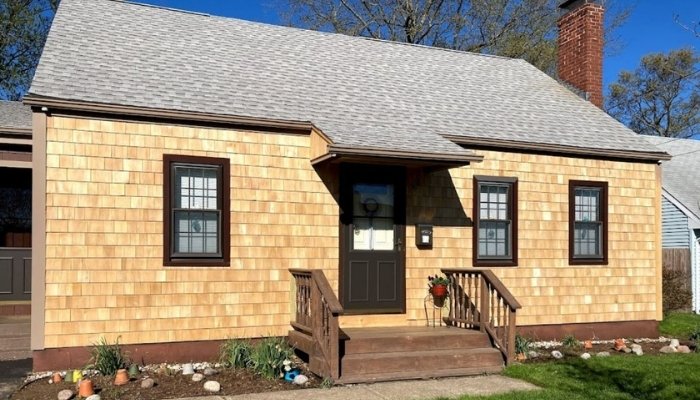
How long will cedar siding last on a typical house? For most homes, the practical range is 20 to 40 years. That is the clearest benchmark for homeowners comparing cedar to other siding options.
Cedar can go past 40 years, and that is true in ideal conditions. Still, if you are planning a budget, a repaint cycle, or a time to replace, 20 to 40 years is the safer range to use.
It is also common for a few boards to fail before the entire wall system does. In other words, how long does wood siding last is not always one single date. A house may still have a serviceable cedar exterior overall, even if certain boards need spot replacement after years of weather exposure.
If you want a broader material overview, read benefits of cedar siding.
What changes how long cedar siding lasts?
The biggest factors are moisture, sun, finish quality, installation quality, and how quickly small issues are fixed. If any one of those goes wrong, long does cedar siding last becomes a much shorter answer.
- Climate and moisture exposure: High humidity, frequent rain, and freeze-thaw cycles can push water into joints, fastener points, and exposed end grain. Over time, that raises the odds of water damage, swelling, rot, and paint failure.
- Sun exposure: South- and west-facing walls often take more UV and weather stress, which can wear down paint or stain faster than shaded walls.
- Installation quality: Good flashing, spacing, sealing, and ventilation matter. Poor installation can trap moisture behind the boards and shorten service life.
- Wood grade and finish: High quality cedar with the right finish will generally hold up better than lower-grade boards left exposed to constant moisture.
- Maintenance habits: Cleaning off buildup, repainting or restaining on time, and replacing damaged boards early all help protect your cedar.
A cedar maintenance guide is especially useful here because mildew, water stains, and peeling or blistering paint are often tied to moisture and finish wear, not just age.
If you see repeated damp spots, do not just apply more paint or stain. Find the moisture source first, then fix the board or flashing area before the finish is redone. Restaining alone does not fix a mildew problem, and moisture is often the root cause behind extractive bleeding and paint failure.
How long does cedar shake siding last compared with other cedar styles?
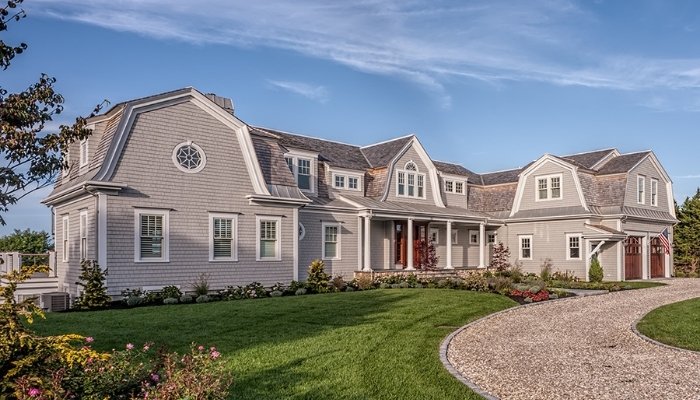
Cedar shake siding can last for decades too, but its real lifespan still depends on exposure and upkeep more than the profile itself. In many cases, cedar shake siding, shingles, and lap siding all live in a similar range when they are installed well and maintained on time.
The main difference is how each style handles water and maintenance:
- Cedar shake siding has a thicker, more textured look and strong curb appeal.
- Cedar shingles can give a more uniform pattern.
- Cedar lap siding sheds water well when gaps, overlap, and flashing are done right.
- Rougher textures and deeper joints can collect more debris if the walls are not cleaned.
If you care about a classic New England look, cedar shake siding often wins on appearance. If you care more about easier cleaning and a simpler paint line, lap siding may feel easier to manage over time.
Free Guide for Homeowners
2026 SIDING MATERIAL GUIDE
Learn how smart homeowners balance aesthetics, durability, and budget to choose the perfect exterior shield that withstands New England’s toughest weather.
How often should you paint or stain cedar siding?
If cedar is painted or stained, plan on redoing the finish before it fails, not after. That is one of the simplest ways to make how long cedar siding lasts a longer number.
K.P. LaMarco’s own cedar guide says painted or stained cedar should usually be refinished every 5 to 7 years, while naturally weathered cedar may need little more than periodic cleaning.
That does not mean every wall ages at the same speed. Sunny elevations, coastal exposure, and areas near sprinklers often need attention sooner. Darker finishes can also show wear faster.
If you are deciding whether to paint or stain, use this simple rule:
- Paint gives a more uniform look and stronger color control.
- Stain shows more of the natural wood grain.
- Both can help protect the boards when they are kept in good condition.
- Neither will fix hidden moisture problems behind the siding.
How to tell if cedar siding needs to be replaced ?
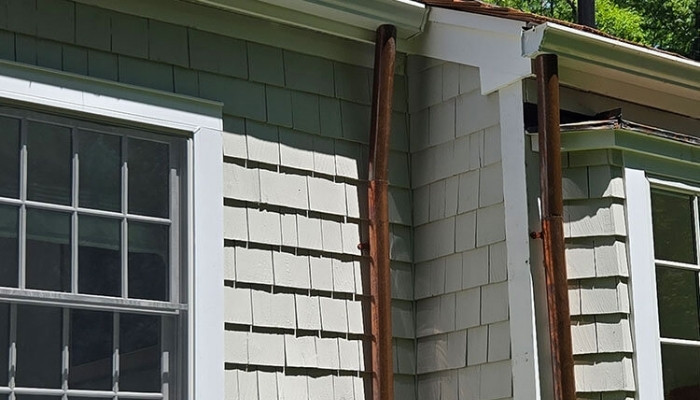
If you are trying to figure out how to tell if cedar siding needs to be replaced, look for repeated failure patterns, not just one ugly board.
A single repair is normal. Damage that keeps coming back is the real warning sign.
Here are the clearest signs of damage to watch for:
- Soft spots or rot
If a board feels soft, crumbly, or spongy, moisture has likely been sitting in the wood for too long. One small section may be repairable, but several soft areas usually mean a deeper problem. - Warping, cupping, or boards pulling away
Boards that no longer sit flat may be taking on and releasing moisture over and over. That can open gaps and let more water behind the siding. - Cracks, splits, or missing pieces
Some surface checking is normal in wood siding, but deep cracks and split edges can let water in. Once those openings spread across multiple walls, replacement starts making more sense than patching. - Mold and mildew that keep coming back
Mold and mildew on the surface may point to trapped moisture, poor drying, or finish breakdown. Cleaning and proper refinishing matter more than adding another top coat over the same issue. - Peeling, blistering, or flaking paint
This is one of the most common visible signs that moisture is building behind the finish. - Water stains or discoloration around joints
Brown streaks, dark staining, or repeated wet marks near trim and seams can point to water getting in. Left alone, that problem can spread into sheathing or framing. - Rising repair frequency
If you keep fixing the same wall, the same trim line, or the same peeling section, the siding may be past the point where maintenance is cost-effective.
If you see one issue, fix it early. If you see several of these at the same time, especially with soft wood or recurring water damage, it is probably time to replace your cedar siding.
Can you repair cedar siding, or is it time to replace it?
Repair cedar siding when the damage is isolated and the rest of the wall is sound. Replace your cedar siding when the problem is widespread, moisture-driven, or already affecting the wall behind it.
Repair is usually the better call when:
- One or two boards are cracked or loose
- The finish is worn but the wood underneath is still solid
- The issue is tied to a small flashing or trim fix
- The rest of the elevation still looks stable
Replacement is usually the better call when:
- Multiple walls are showing signs of damage
- You have rot in more than one area
- Paint failure keeps returning after prep and repainting
- Mold, mildew, or water stains keep spreading
- The siding is near or past the end of its expected service range
A site inspection matters here. Two homes built the same year can age very differently depending on tree cover, drainage, overhang depth, and whether painting cedar siding was kept up on time.
How long does wood siding last compared with other siding options?
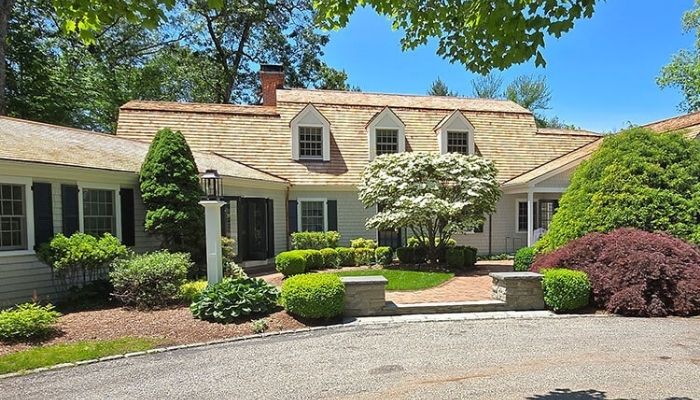
How long does wood siding on a house last depends on the material, upkeep, and climate, but cedar sits in a different category from low-upkeep options like fiber cement siding and many composite products. K.P. LaMarco’s material guides place cedar at 20 to 40+ years, vinyl at 20 to 30 years, fiber cement at 30 to 50 years, and composite around 30+ years.
Typical comparison
| Material | Typical lifespan | Upkeep | Best for | Avoid if |
| Cedar wood siding | 20 to 40+ years | Moderate | Natural wood look, strong curb appeal | You do not want regular paint or stain work |
| Vinyl siding | 20 to 30 years | Low | Lower upfront cost and simple upkeep | You want real wood texture |
| Fiber cement siding | 30 to 50 years | Low to moderate | Harsh weather and lower upkeep | You want the lightest material |
| Composite siding | 30+ years | Low | Wood-like look with less maintenance | You want true natural wood |
These ranges are useful for planning, but they do not tell the whole story. Cedar can still be the right choice if you want natural wood, rich texture, and are willing to keep up with maintenance.
Fiber cement siding and composite options often make more sense if your main goal is lower upkeep in wet or freeze-thaw conditions.
We’d recommend looking into our latest work and getting a better overview of the available options..
FAQs
Wood siding can last anywhere from about 20 to 40 years, depending on the species, installation, finish, and climate.
Painted cedar siding can last for decades, but the paint itself needs upkeep long before the boards reach end of life. K.P. LaMarco’s cedar guide says painted or stained cedar is usually refinished every 5 to 7 years, and peeling or blistering often points to moisture behind the paint film.
Sometimes, yes. Cedar shake siding has more texture and shadow lines, which can trap more dirt and moisture than flatter profiles if the walls are not cleaned and checked on a regular schedule.
Paint is usually best if you want a solid, uniform color. Stain is usually better if you want more of the natural wood grain to show through. In both cases, the bigger issue is keeping the finish in good shape before moisture gets behind it.
Free Guide for Homeowners
2026 SIDING MATERIAL GUIDE
Learn how smart homeowners balance aesthetics, durability, and budget to choose the perfect exterior shield that withstands New England’s toughest weather.
Conclusion
Cedar siding can last a long time, but the real answer depends on moisture control, finish upkeep, and how fast you act when the siding starts showing signs of damage.
If your home has isolated wear, early repairs can buy you more years.
If you are seeing soft boards, recurring mold and mildew, peeling paint, or widespread water damage, the smarter move is often a full replacement instead of another short-term patch.
If your siding is showing several of these signs, schedule an inspection with K.P. LaMarco’s Connecticut siding replacement team.