
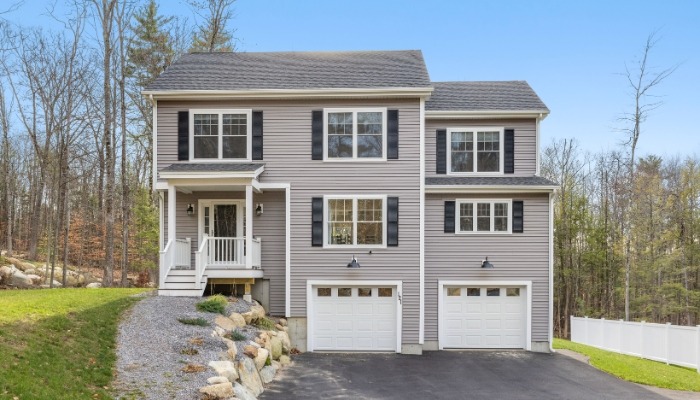
Best Siding for New England – A Complete Guide
Planning a home exterior renovation in New England? Choosing the right siding is one of the most important decisions you’ll make.
New England homes face freezing winters, humid summers, heavy rain, coastal salt air, wind, snow, and constant freeze-thaw cycles.
That means the best siding for New England needs to do more than look good. It has to protect your home from moisture, temperature swings, and long-term wear.
In this guide, we’ll compare the best house siding for New England homes, including fiber cement, vinyl, cedar, engineered wood, and composite siding, so you can choose the option that best fits your home, budget, and style.
What is the Best Siding for New England?
For most homes in Connecticut and throughout New England, fiber cement siding is the best overall choice because it offers strong resistance to moisture, pests, fire, freeze-thaw cycles, and harsh seasonal weather.
It also provides a long lifespan with relatively low maintenance.
That said, the right siding depends on your home’s location, exposure, budget, and the look you want.
| Homeowner Priority | Best Siding Option | Why |
| Best overall siding for New England | Fiber cement siding | Durable, moisture-resistant, low-maintenance, and built for harsh weather |
| Best budget-friendly option | Vinyl siding | Affordable, low-maintenance, and available in insulated options |
| Best historic or traditional look | Cedar or wood shingle siding | Ideal for Colonial, Cape Cod, and historic New England homes |
| Best low-maintenance wood look | Composite siding | Wood-like appearance with better resistance to moisture and pests |
| Best for coastal exposure | Fiber cement or composite siding | Better suited for salt air, wind-driven rain, and humidity |
In short, fiber cement is usually the best siding for New England if you want the strongest balance of durability, appearance, and long-term value.
Vinyl siding is a good choice for a more affordable exterior option, while cedar and wood shingles remain popular for traditional New England curb appeal.
Learn how smart homeowners balance aesthetics, durability, and budget to choose the perfect exterior shield that withstands New England’s toughest weather.
Free Guide for Homeowners
2026 SIDING MATERIAL GUIDE
Why New England Siding Needs to Be Chosen Carefully
New England’s four-season climate is beautiful, but it is hard on exterior building materials. Siding in New England has to handle winter freezes, spring rain, summer humidity, strong sun, coastal salt air, and fall temperature swings.
The wrong siding material, or a good material installed poorly can lead to:
- Moisture intrusion and rot
- Hidden sheathing damage
- Cracking, warping, or splitting
- Fading from UV exposure
- Mold or algae growth in shaded areas
- Higher maintenance and repair costs
That’s why New England siding should be chosen based on both material performance and installation quality. Even durable siding can fail early if water gets behind it because of poor flashing, missing house wrap, improper clearances, or damaged sheathing.
Here are the main siding options to consider.
1. Fiber Cement Siding
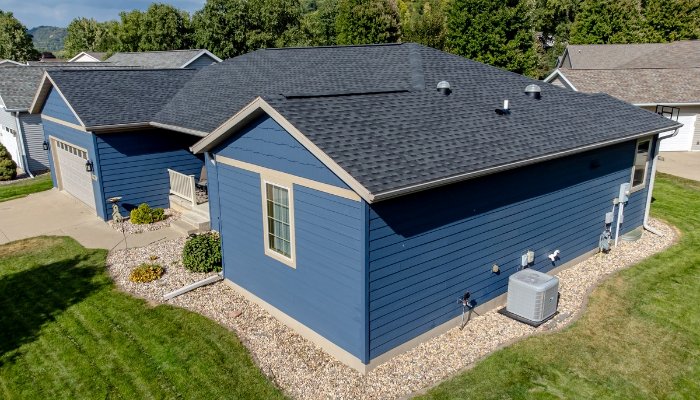
Fiber cement siding is one of the best all-around choices for New England homes because it performs well against moisture, pests, fire, wind, snow, and seasonal temperature swings.
It is made from cement, sand, and cellulose fibers, creating a dense siding material that can mimic wood clapboard, shingles, or shakes without the same level of maintenance. It also works well with traditional New England shingle siding styles.
Main drawback: The main drawback is installation complexity. Fiber cement is heavier than vinyl and requires proper cutting, fastening, flashing, and moisture management, especially on older New England homes.
Best for: Homeowners who want a durable, low-maintenance exterior that can handle New England weather while still offering strong curb appeal. It is especially worth considering for full siding replacement projects, coastal homes, older Connecticut homes, and homeowners planning to stay in their home long-term.
2. Vinyl Siding
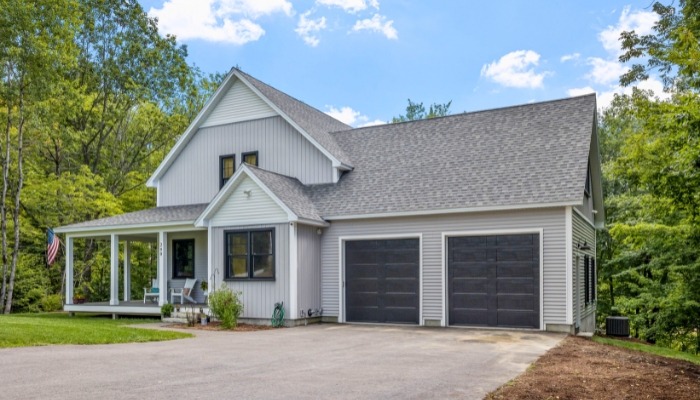
Vinyl siding is one of the most commonly used siding materials in the Northeast because it is affordable, low-maintenance, and widely available.
For homeowners comparing exterior vinyl siding New England options, premium vinyl can offer a practical balance of cost, appearance, and performance.
It comes in many colors, textures, and profiles, including options that resemble traditional clapboard, cedar shakes, and shingle-style siding.
Vinyl is usually the most cost-effective way to refresh a home’s exterior. It requires little maintenance beyond occasional cleaning, and insulated vinyl options may help improve comfort when installed with proper house wrap, flashing, and air sealing.
Main drawback: The trade-off is that lower-grade vinyl can become brittle in extreme cold, fade faster with UV exposure, or buckle if installed incorrectly.
Best for: Homeowners who want an affordable, low-maintenance siding option and are not necessarily looking for the most premium exterior material. It can be a strong upgrade over aging aluminum or worn wood siding, especially when budget is the main concern.
3. Cedar and Wood Shingle Siding
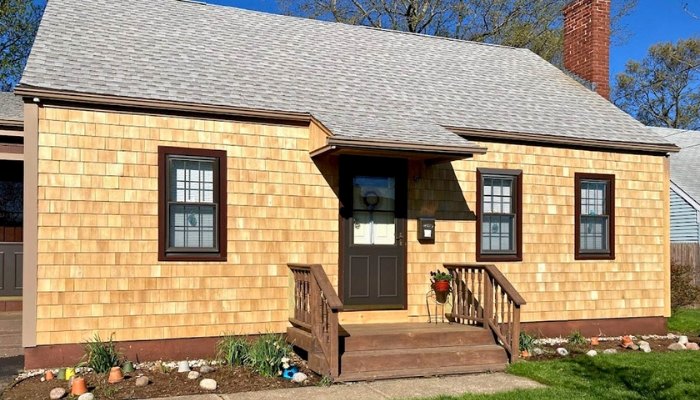
No material matches the natural warmth and character of real wood siding. In New England, cedar siding is especially popular for Colonial, Cape Cod, cottage, and farmhouse-style homes.
Cedar contains natural oils that help it resist decay, and it can be stained or painted to match a wide range of architectural styles. Traditional wood siding can also be installed as clapboard, board-and-batten, shakes, or shingles.
For homeowners searching for New England shingle siding, cedar shingles remain one of the most authentic choices.
Main drawback: The drawback is maintenance. Cedar needs regular staining, sealing, or painting to protect it from moisture damage. It can also be vulnerable to rot, pests, warping, and splitting without proper upkeep.
Best for: Homeowners who want authentic New England character and are comfortable with a higher maintenance schedule. If you like the look of cedar but want less upkeep, consider fiber cement shingles, engineered wood, or composite siding as alternatives.
4. Composite Siding
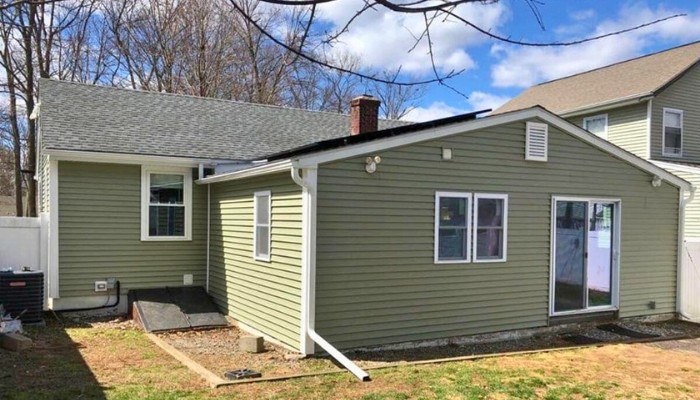
Composite siding is a broad category that includes siding products made from engineered or synthetic materials designed to improve durability, moisture resistance, and long-term performance.
It is helpful to separate fiber cement from composite siding because homeowners often compare them as different options.
Fiber cement is made from cement, sand, and cellulose fibers, while composite siding may include polymer-based, resin-based, or engineered materials designed to mimic wood with less maintenance.
Composite siding provides a wood-like look with less maintenance than natural cedar. It resists moisture, insects, mold, and rot, and it holds its shape better than natural wood in wet or changing weather.
Main drawback: Composite siding usually costs more than vinyl. Product quality, warranty terms, painting limits, wind ratings, and moisture performance can also vary, so homeowners should review the specific product before choosing it.
Best for: Homeowners who want a premium wood-look exterior without regular staining or sealing. It can also be a good fit for homes near the coast or in areas with consistent exposure to wet weather, shade, wind, or temperature extremes.
5. Engineered Wood Siding
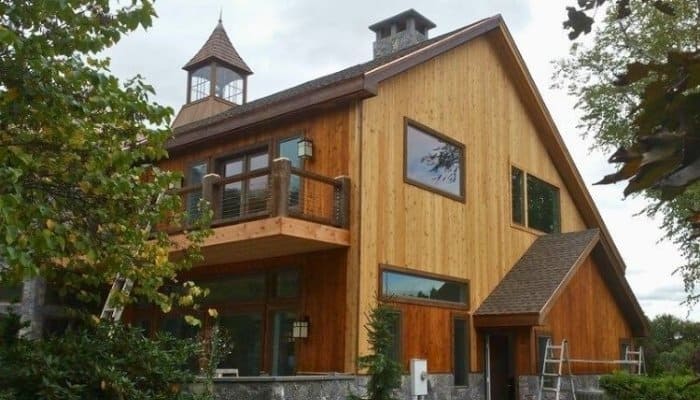
Engineered wood siding is another option for homeowners who want the appearance of natural wood with improved consistency and durability.
Unlike traditional cedar, engineered wood is manufactured using wood fibers or strands combined with resins and protective treatments. It offers a wood-like appearance, several profiles and finishes, and less maintenance than cedar.
Main drawback: Engineered wood still needs proper installation and moisture management. Product quality and warranty terms vary, and some products may not be ideal for extreme coastal exposure unless approved for that use.
Best for: Homeowners who want more texture and warmth than vinyl but do not want the full maintenance demands of cedar..
Siding Comparison for New England Homes
| Material | Approx. Installed Cost | Typical Lifespan | Maintenance |
| Vinyl siding | $3.92–$5.65 / sq. ft. | 20–30 years | Low |
| Fiber cement siding | $5.43–$6.48 / sq. ft. | Up to 50 years | Low to moderate |
| Engineered wood siding | Quote-specific; typically higher than vinyl and fiber cement | 30–40 years | Medium |
| Cedar or wood shingle siding | $6.14–$7.24 / sq. ft. | 20–25 years | High |
| Composite siding | Quote-specific; typically premium | 40–50+ years | Low |
Final pricing depends on home size, material, access, trim details, tear-off, and whether repairs are needed.
Vinyl will usually give you the lowest upfront cost. Fiber cement and composite siding tend to offer stronger long-term value when durability, curb appeal, and lower maintenance are priorities. Cedar offers the most authentic traditional look but requires the most upkeep.
How to Choose the Right Siding for Your New England Home
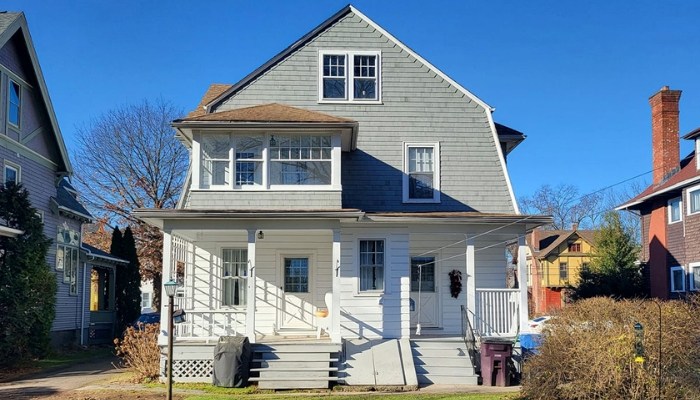
Your location should influence your siding choice. A coastal home in Mystic, Newport, or along the Connecticut shoreline faces different siding challenges than an inland home exposed to snow, ice, and deep winter freezes.
| Home Type | Main Concerns | Best Siding Options |
| Coastal homes | Salt air, wind-driven rain, humidity, moisture | Fiber cement, composite, premium vinyl |
| Inland homes | Freeze-thaw cycles, snow, ice, temperature swings | Fiber cement, insulated vinyl, engineered wood |
| Historic homes | Preserving traditional New England character | Cedar shingles, wood clapboard, fiber cement shingles |
| Shaded or wooded lots | Mildew, algae, pests, moisture retention | Fiber cement, composite, properly installed vinyl |
| Budget-focused homes | Upfront cost, low maintenance | Vinyl or insulated vinyl siding |
Also consider your home’s style. Clapboard works well for Colonial and traditional homes. Shingle siding is ideal for Cape Cod, coastal, and historic homes. Board-and-batten can create a more modern farmhouse or accent look.
Energy efficiency matters too, but siding alone is not usually the whole solution. The best results come from pairing the right siding with proper house wrap, flashing, air sealing, and insulation upgrades where needed.
Tip: Before choosing a siding material, ask your contractor how the product handles freeze-thaw cycles, moisture, wind exposure, fading, and future maintenance. Also confirm whether the estimate includes house wrap, flashing, trim details, and repairs to damaged sheathing.
The siding material matters, but installation quality is what helps it perform long-term in New England weather.
Curb Appeal and Resale Value
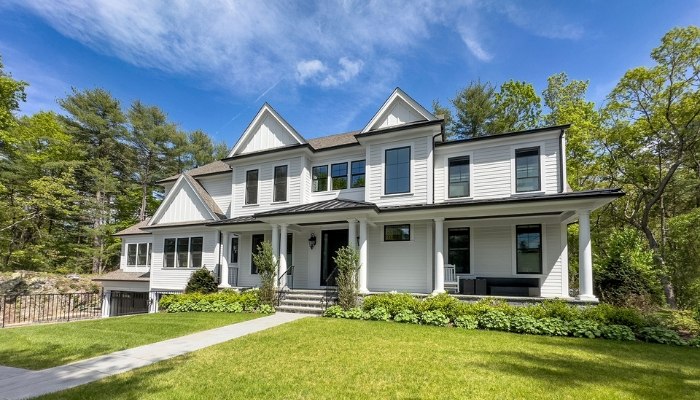
The right siding can transform how your home looks and improve resale potential.
- Vinyl siding offers an affordable way to modernize older homes.
- Fiber cement works well for clapboard, board-and-batten, shingle, and shake profiles.
- Composite siding provides a premium wood-look appearance with lower maintenance than natural cedar.
- Cedar siding adds warmth and authenticity, especially for historic homes and traditional New England shingle siding styles.
According to the 2025 Cost vs. Value Report from JLC, siding replacement performs especially well in New England. Fiber cement siding replacement shows an estimated 144.9% cost recouped, while vinyl siding replacement shows an estimated 92.7% cost recouped.
If you are selling within the next 5 to 10 years, fiber cement and composite siding may be worth considering because they combine appearance, durability, and long-term value.
FAQs
What is the best siding for a house in New England?
The best siding for New England homes is usually fiber cement because it offers strong resistance to moisture, pests, fire, wind, and freeze-thaw cycles. Composite siding and engineered wood are also strong choices for homeowners who want durability with a wood-like appearance. Vinyl siding is a more affordable option, especially when using a premium or insulated product.
What is the best New England shingle siding?
The best New England shingle siding depends on whether you want authentic wood or lower maintenance. Cedar shingles offer the most traditional New England look and are popular for Cape Cod, Colonial, coastal, and historic homes. However, they require regular staining, sealing, or painting. For less upkeep, fiber cement shingles or composite shingle siding may be better long-term options.
Is exterior vinyl siding a good choice in New England?
Exterior vinyl siding can be a good choice in New England when homeowners want an affordable, low-maintenance option. Premium vinyl or insulated vinyl usually performs better than low-grade vinyl because it can better handle temperature swings, wind, and seasonal weather. However, homeowners should compare vinyl against fiber cement, composite, and cedar if long-term durability or historic character are top priorities.
Learn how smart homeowners balance aesthetics, durability, and budget to choose the perfect exterior shield that withstands New England’s toughest weather.
Free Guide for Homeowners
2026 SIDING MATERIAL GUIDE
Conclusion
Choosing the best house siding for New England is about more than picking a color or style. Your siding needs to protect your home from moisture, freezing temperatures, humidity, coastal air, wind, and daily wear while still improving curb appeal.
For most New England homes, fiber cement siding offers the best overall balance of durability, low maintenance, and resale value.
Vinyl siding is a strong budget-friendly option, cedar and wood shingles offer classic New England character, and composite siding works well for homeowners who want a premium wood-look exterior with less upkeep.
If you’re planning a siding project in Connecticut, K.P. LaMarco can help you compare materials, review your home’s exterior, and choose siding that fits your goals.
Contact us when you’re ready to schedule a siding consultation.