
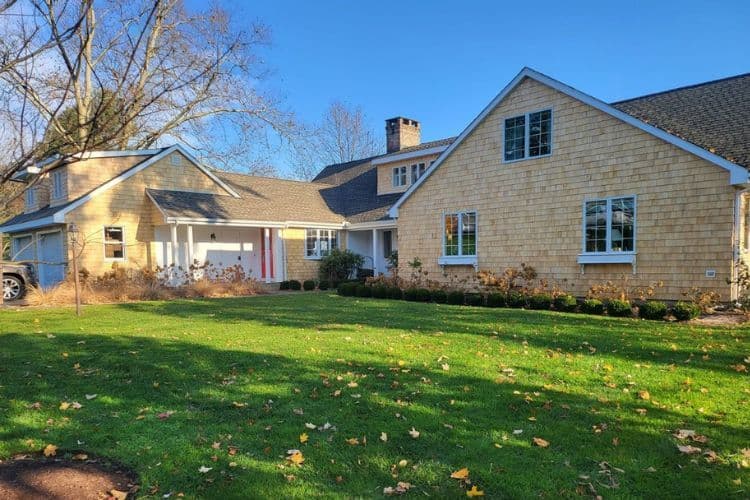
How Long Does Wood Siding Last in Connecticut?
If you’ve got wood siding on a Connecticut home, you’ve probably wondered how much life it still has left. Unfortunately, the year it went up doesn’t tell you much about it.
Realistically, two houses on the same street can have wood siding installed the same summer, and one still looks fine while the other has rot at the corners. That’s because moisture, installation, and upkeep decide how wood siding ages, and not the calendar.
So the question is, how long does wood siding actually last? Well:
Most natural wood siding holds up for 20 to 40 years. Cedar, redwood, and other naturally durable species can actually go longer when conditions are good. However, the true number depends on how well the boards stay dry, how they were installed, and the condition of the paint or stain. Additionally, whether or not pests and other small problems got fixed early.
With that said, below we’ll discuss what shortens wood siding’s life, how to get more years out of it, and when repair makes more sense than replacement. We’ll also compare real wood against engineered wood, fiber cement, vinyl, and composite near the end.
Key takeaways:
- Wood siding lasts 20 to 40 years as a baseline number, but it’s not a perfect replacement deadline.
- Cedar, redwood, and cypress usually outlast pine, spruce, and fir.
- Water getting in and staying in does more damage than fading ever will.
- Paint or stain often wears out years before the boards do.
- Localized damage is usually a repair. Rot across several walls is usually a replacement.
Free Guide for Homeowners
2026 SIDING MATERIAL GUIDE
Learn how smart homeowners balance aesthetics, durability, and budget to choose the perfect exterior shield that withstands New England’s toughest weather.
What Is the Average Lifespan of Wood Siding?

Most wood siding lasts 20 to 40 years, and that’s the number to plan around if your house has traditional clapboards or shingles that were installed correctly and kept up with a reasonable amount of care.
It’s a wide window because wood siding isn’t one product. A cedar clapboard on a well-drained wall with a good stain has a very different future than a pine board sitting behind an overflowing gutter, even if both went up the same year.
When the species, grade, finish, drainage, and installation all line up, wood siding can keep going past 40 years. And plenty of older Connecticut homes prove it. Go the other way, however, with water hitting the same boards every storm or paint left to peel until bare wood is showing, and siding can fail in half that time.
Is the Finish Lifespan the Same as the Siding Lifespan?
No, and mixing the two up is how homeowners end up replacing boards that were still fine. The finish is the paint or stain on the surface, and it wears out on its own schedule, usually years before the wood underneath does. The siding is the boards themselves, and those last as long as they stay sound and keep water off the wall.
So if your stain has faded or the paint is peeling on the south side, that’s a maintenance warning, not a replacement notice. The boards under it can be perfectly solid.
What you actually want to do is press on the wood. Boards that feel soft, crumble at the edges, have split deep along the grain, or never seem to dry out are a different story, and those are the ones worth having looked at.
How Long Does Each Type of Wood Siding Last?
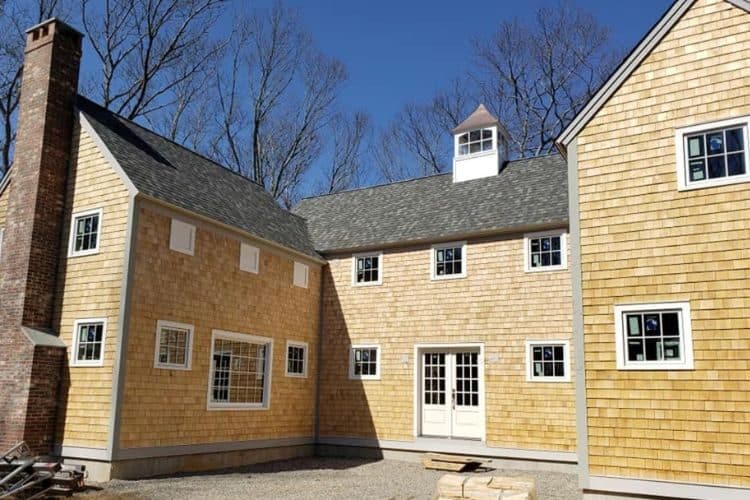
Cedar, redwood, and cypress carry natural oils and extractives that slow down rot and insects, so they tend to reach the upper part of that 20 to 40-year window. Pine, spruce, and fir don’t have that built-in resistance, which means they depend on their paint or stain to do the protecting:
| Wood Category | General Lifespan | Main Strength | Main Vulnerability | Maintenance Level |
| Cedar | Middle to upper end of 20-40 years | Natural rot and insect resistance | Still fails at unflashed joints and wet lower courses | Moderate |
| Redwood and cypress | Upper end of 20-40 years, sometimes beyond | Heartwood holds up well against decay | Quality varies by grade; harder to source and pricier in New England | Moderate |
| Pine, spruce, and fir | Lower to middle end of 20-40 years | Affordable and easy to work with | Soaks up water fast through cracks, end grain, and failed paint | High |
Cedar, redwood, and cypress have the best long-term odds because they resist decay on their own, and we’ve covered how long cedar siding lasts in its own post. Pine, spruce, and fir are the budget end of the group, and they’re fine siding as long as the coating stays intact. Just keep in mind that once paint cracks or a cut end goes unprimed, water gets into the board within a season or two.
What Factors Affect How Long Wood Siding Lasts?
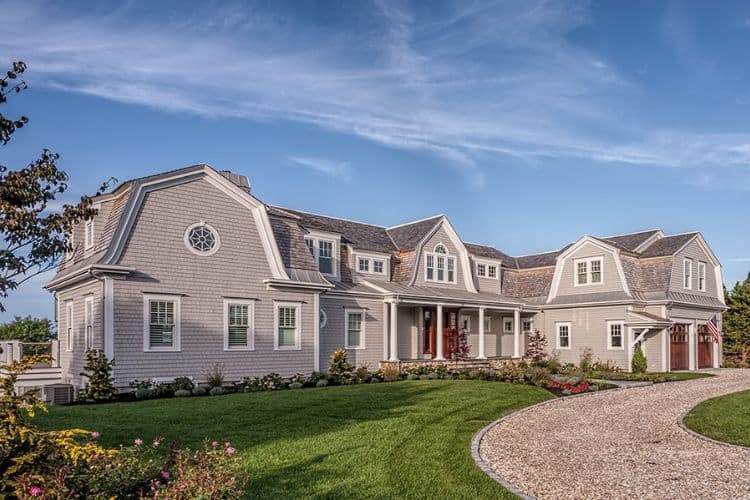
Water decides most of it. Just picture the wall under a gutter that overflows every heavy rain. Those boards get soaked, dry out, and get soaked again dozens of times a year, and each round makes the wood swell and shrink until the surface splits into thin, lengthwise cracks, the paint loses its grip, and fungi move into wood that never fully dries.
The USDA Forest Products Laboratory has documented that pattern for decades. Basically, if water is left long enough, rot works through the board and into the sheathing behind it.
How Can You Make Wood Siding Last Longer?
Keep it dry, keep the finish working, and fix small things while they’re still small. Wood siding that gets those three things tends to reach the far end of its lifespan, and most of the work is simply looking, not doing.
How Often Should Wood Siding Be Inspected?
Walk the whole house once a year, then again after any big storm. Spring works well in Connecticut, since that’s when winter’s damage shows and you’ve got the weather to deal with it.
How Often Should Wood Siding Be Painted or Stained?
There’s no single schedule, because paint, solid stain, and penetrating stain all wear differently. Sherwin-Williams puts a typical exterior repaint at every 7-10 years depending on climate and paint quality, and Connecticut weather tends to be closer to the front of that.
Stains often need attention sooner, since lighter pigment and rougher textures give up their protection faster.
How Should Wood Siding Be Cleaned?
Mild detergent, a soft brush, and a garden hose handle most of it. If there’s mildew, clean that off with a diluted oxygen bleach solution before you refinish, because a new coat over mildew just seals it in. Also, give the wood a few dry days before any stain or paint goes on.
And go easy with pressure washers. Power washing can seriously damage wood siding, and we see it often: the spray gouges the grain, blows out caulk, and drives water behind the boards, which creates the exact problem you were trying to prevent.
When it’s time for a real maintenance round, this is the order that works:
- Find where water is getting in and stop it
- Clean off dirt, mildew, and algae gently
- Repair open joints, loose boards, and damaged spots
- Replace any individual boards that have gone soft
- Prime bare wood and apply the right finish for the species
- Keep gutters clear and pull plants, mulch, soil, and snow back from the siding
Also, a note on older homes:
If your house was built before 1978, scraping, sanding, cutting, or pulling off painted siding can disturb lead-based paint. The EPA recommends lead-safe work practices and hiring a lead-safe certified contractor for that kind of work.
How Do You Know Whether to Repair or Replace Wood Siding?
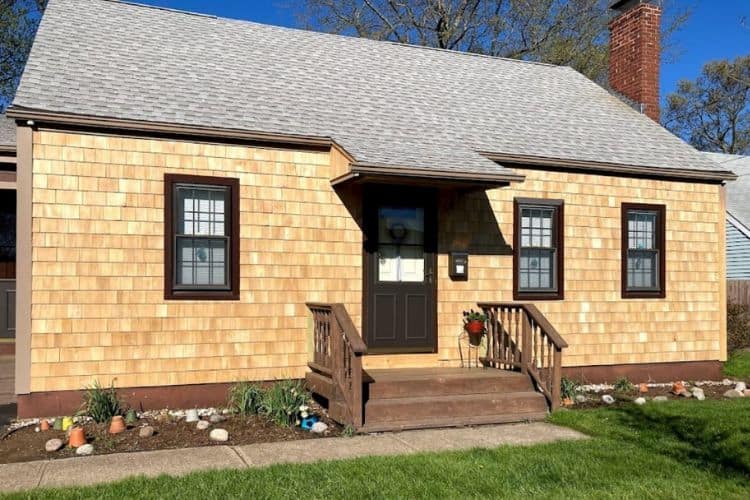
In general, isolated damage should be repaired, while damage that’s spread across the house or reached the wall behind the siding should get replaced.
Here’s how we sort the cases in between:
| Repair wood siding when: | Replace wood siding when: |
| Damage is limited to one or a handful of boards | Rot or softness shows up on more than one wall |
| The wood around the damage is firm and dry | Boards are crumbling, badly warped, or split deep along the grain |
| You’ve found the water source and fixed it | Moisture problems keep returning after earlier repairs |
| Peeling or fading is only on the surface | Damage has reached the sheathing or the wall behind it |
| The profile can be matched with a new board | Insect or woodpecker damage is widespread |
| The sheathing behind the board is still sound | You’re repairing and repainting more often every year |
The hard cases are the ones where the siding looks fine from the driveway but a board gives under your thumb, or paint keeps peeling in the same spot near a window no matter how often it’s redone. That usually means water is getting in somewhere you can’t see, and it’s worth having someone pull a board or two before deciding.
If it turns out to be a few boards under a bad gutter, our guide to repairing wood siding walks through the fix. If it’s on three walls, however, our post on when to replace siding is the one to read next.
Wood Siding vs Other Siding: Which Lasts Longer?
Fiber cement and composite usually outlast natural wood. Vinyl lasts about as long as wood but needs far less upkeep. Where wood wins is looks. Here’s how the four compare on a Connecticut house:
| Material | Lifespan | Maintenance | Best for | Avoid if | Alternative |
| Natural wood | 20-40 years, longer with good care | Highest: needs refinishing, inspections, board repairs | Real grain, historic homes, traditional New England look | You don’t want to refinish or check on it | Composite |
| Fiber cement | Generally longer than wood | Low: just repaint every 15+ years | Weather resistance with a wood-style profile | You want the lowest upfront cost | Natural wood |
| Vinyl | 20-40 years | Lowest: occasionally wash, and check for cracks | Budget and low upkeep | Authentic wood look or historic accuracy matters most | Fiber cement |
| Composite / engineered wood | Varies by product and warranty | Low: occasional cleaning, some repainting | Wood appearance without wood maintenance | You want solid, real wood | Fiber cement |
Natural wood is still the best-looking option and the right call for a lot of older Connecticut homes, but it’s the only one on this list that depends on you to reach its full lifespan.
Composite and engineered wood get close to the look without the upkeep, and it’s worth knowing they’re manufactured products, not solid boards, so they age differently.
What Should You Do Next If Your Wood Siding Is Aging?
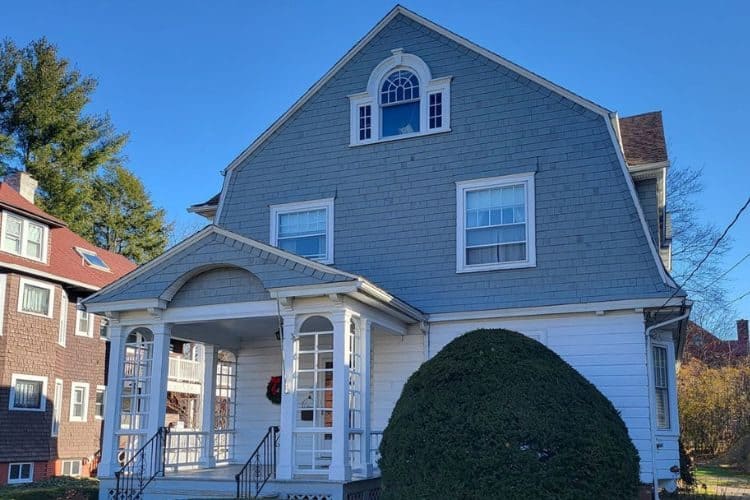
If you’ve read this far and you’re pretty sure your siding is somewhere in that 20 to 40-year window, here’s the order to work through:
- Pin down the age and species. Old invoices, renovation records, or a past inspection report usually have it, and it tells you whether you’re dealing with cedar or a softer wood that needs closer watching.
- Walk every wall and take photos. Peeling finish, cracks, soft boards, dark staining, warping. Photos make it easy to compare year to year.
- Look for where water is coming from. Gutters, downspouts, flashing, roof runoff, plants against the house, and the bottom few courses.
- Sort finish problems from wood problems. Faded stain is maintenance. A board that gives under your thumb is damage. Rot on three walls is something else.
- Get a professional look if it’s widespread. Or if it keeps coming back or might be behind the siding. That’s the point where guessing gets expensive.
- Weigh repair against replacement. Consider how bad it is, how long you plan to stay, how much upkeep you want, and how much the look matters.
Do those in order and you’ll have a clear picture of where your siding stands before anyone gives you a quote.
Free Guide for Homeowners
2026 SIDING MATERIAL GUIDE
Learn how smart homeowners balance aesthetics, durability, and budget to choose the perfect exterior shield that withstands New England’s toughest weather.
The Bottom Line
Most wood siding in Connecticut lasts 20 to 40 years, but how yours ages depends on whether water has been getting in and how quickly it got dealt with. Fading and worn finish are normal. What actually ends a siding’s life is water that keeps getting in, rot that spreads past one wall, and repairs that keep coming back.
If you’re not sure which of those you’re looking at, contact K.P. LaMarco for a free inspection. We’ll tell you plainly whether it needs maintenance, a few new boards, or a bigger fix.